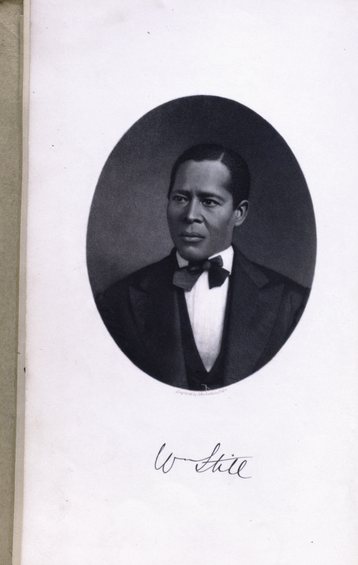
A family divided
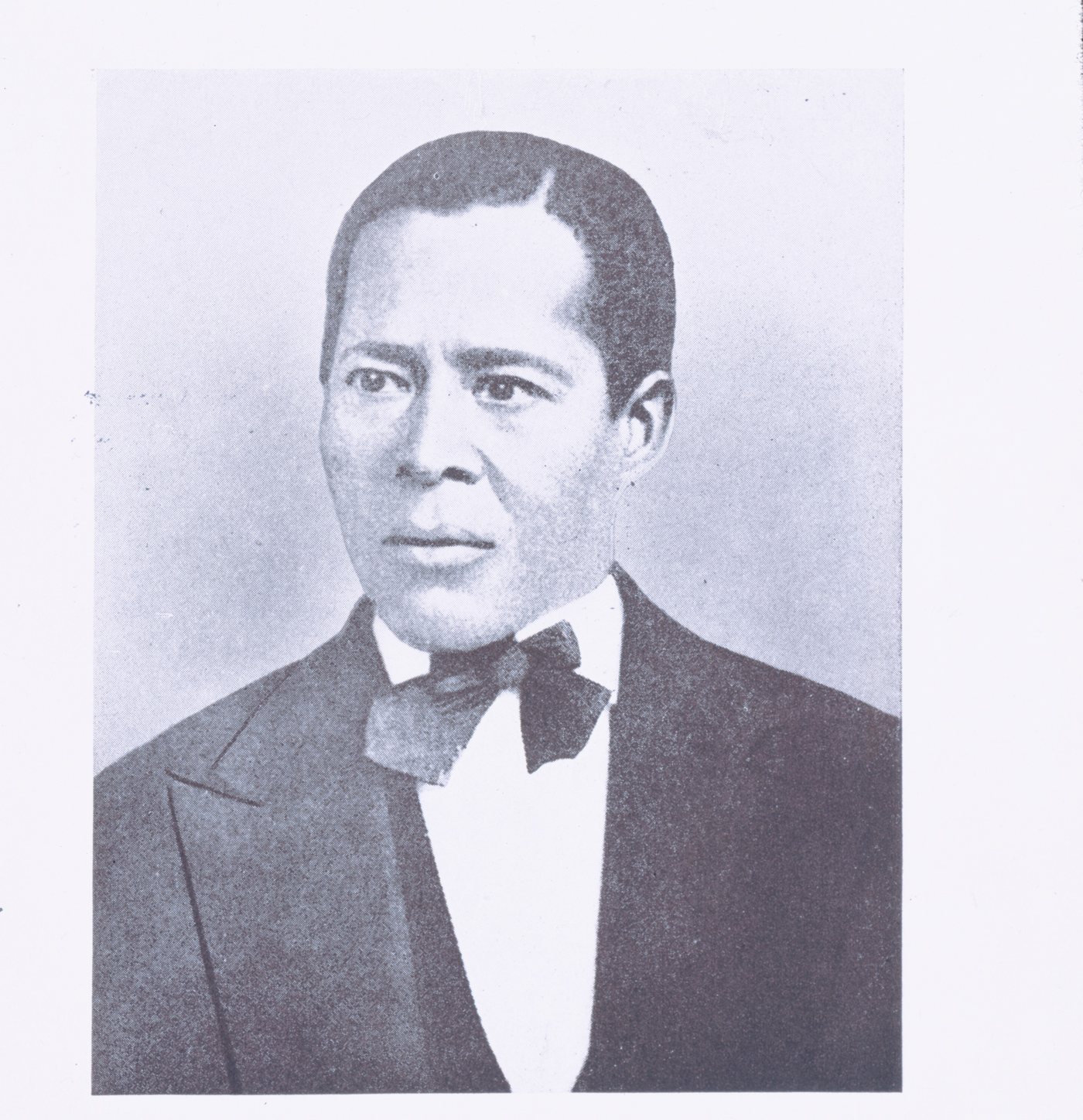
William Still was born in 1821 near Medford, New Jersey, the youngest of eighteen children. His parents, Levin and Sidney Still, had both been enslaved in Maryland. Sidney escaped from the Eastern Shore early in the century. She had to leave her son Peter behind.
In 1841 William left home to work on neighboring farms, and in 1844 he moved to Philadelphia. In 1847 he married Letitia George and took a job as a clerk in the office of the Pennsylvania Anti-Slavery Society. Their daughter Caroline was born the next year.
The antislavery office
The office became a stopping place for people escaping slavery. In March 1849 Henry “Box” Brown arrived there sealed in a wooden box, shipped as dry goods from Richmond, Virginia.
In August 1850 a man came into the office seeking help. He turned out to be Still’s older brother, Peter, the son their mother had left in slavery decades before. Still had never met him. Peter’s wife and children were still enslaved in Alabama, and a plan to bring them north failed. Peter’s story was published in 1856 as The Kidnapped and the Ransomed.
The Fugitive Slave Act of 1850 put everyone who aided freedom seekers at risk of arrest. In December 1852 Philadelphia abolitionists organized a new vigilance committee, and Still became chairman of its acting committee. He wrote down the details of each person who came through: name, age, appearance and the family members left behind. From 1850 to 1855 he lived on Ronaldson Court, where he met and aided many freedom seekers, Harriet Tubman among them. Many of the people he helped went on to Canada. In 1855 Still traveled to Canada to visit the Black communities there. He led the committee until he resigned in 1861.
Still feared arrest under the new law. He sometimes hid his journal in a nearby cemetery, and in 1860 he stored the record books in the loft of a building at Lebanon Cemetery.
These facts must never be lost sight of. The race must not forget the rock from whence they were hewn, nor the pit from whence, they were digged.
War and equal rights
In 1859 Still began a campaign against segregation on Philadelphia’s streetcars. It lasted eight years.
In 1861 he ended his work at the antislavery office and opened a coal yard. In 1864 he became post sutler at Camp William Penn outside Philadelphia, the first Union Army training camp only for Black soldiers. The camp stood in Cheltenham Township and took recruits from Pennsylvania, Delaware and New Jersey. Between June 1863 and August 1865, more than 10,000 men trained there in eleven regiments of United States Colored Troops. As sutler, Still ran the camp’s store.
The streetcar campaign succeeded in 1867. That year Still published a pamphlet telling the history of the struggle.
The record
In 1871 the Anti-Slavery Society asked Still to write a history of the Underground Railroad. He wrote it at his home at 244 South 12th Street. The Underground Rail Road appeared in 1872, subtitled A Record of Facts, Authentic Narratives, Letters, &c. In a later preface he explained that he had felt moved, “for years previous to Emancipation, to preserve the matter found in the pages of this humble volume.” Its 780 pages document about 846 freedom seekers, among them Henry “Box” Brown, William and Ellen Craft and Harriet Tubman. Across his years at the office, Still recorded the names, ages and families of nearly 1,000 people. He exhibited the book at the 1876 Centennial Exposition in Philadelphia. A revised edition followed in 1879.
Still stayed active in Philadelphia’s civic life. In 1874 he published a pamphlet supporting a reform candidate for mayor. In 1880 he helped organize one of the earliest YMCAs for Black youth and served on the Freedmen’s Aid Committee. From 1896 he served as vice president and then president of the Pennsylvania Society for the Abolition of Slavery. He died at his home in Philadelphia on July 14, 1902, survived by his wife and three children. His Journal C, which records freedom seekers from 1852 to 1857, is held at the Historical Society of Pennsylvania.