Great Barrington to Harvard
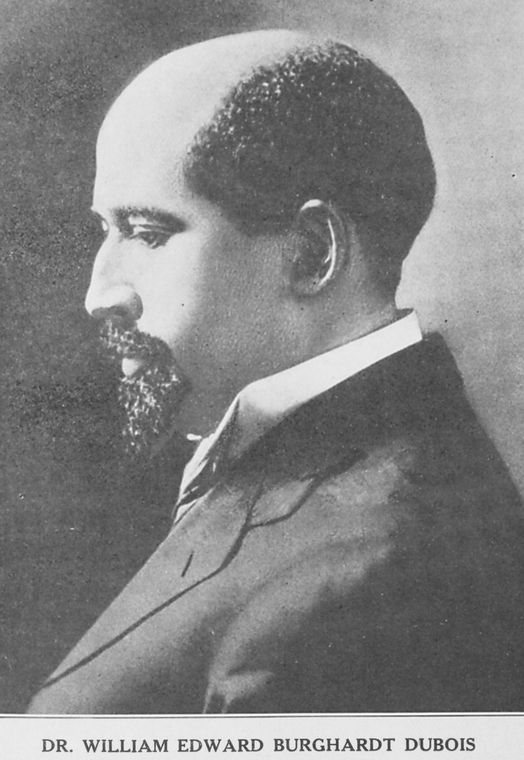
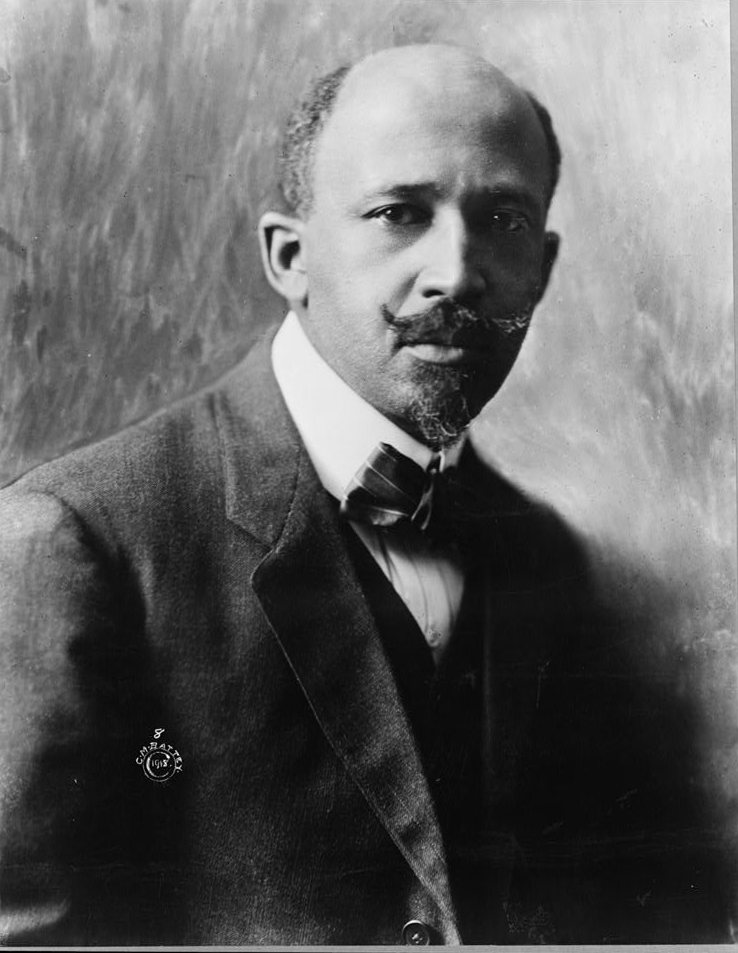
William Edward Burghardt Du Bois was born on February 23, 1868, in Great Barrington, Massachusetts. His family had roots in the area going back generations. In June 1884 he became the first African American to graduate from the town’s high school.
In 1885 he went south to Fisk University in Nashville, Tennessee, and graduated in 1888. He then entered Harvard as a junior, earning a second bachelor’s degree in 1890 and a master’s degree in 1891, and he went on to study at the University of Berlin. In 1895 he became the first African American to receive a PhD from Harvard. His dissertation, The Suppression of the African Slave Trade to the United States, was published in 1896.
Scholar of the color line
Du Bois taught briefly at Wilberforce University in Ohio, where he met Nina Gomer; they married in 1896. That fall he began a study of Philadelphia’s Black community, published in 1899 as The Philadelphia Negro. From 1897 to 1910 he taught at Atlanta University and directed studies of the social conditions of Black Americans. His young son, Burghardt, died of diphtheria in 1899. At the Paris Exposition of 1900 he exhibited a set of charts and graphs about the lives of Black Americans.
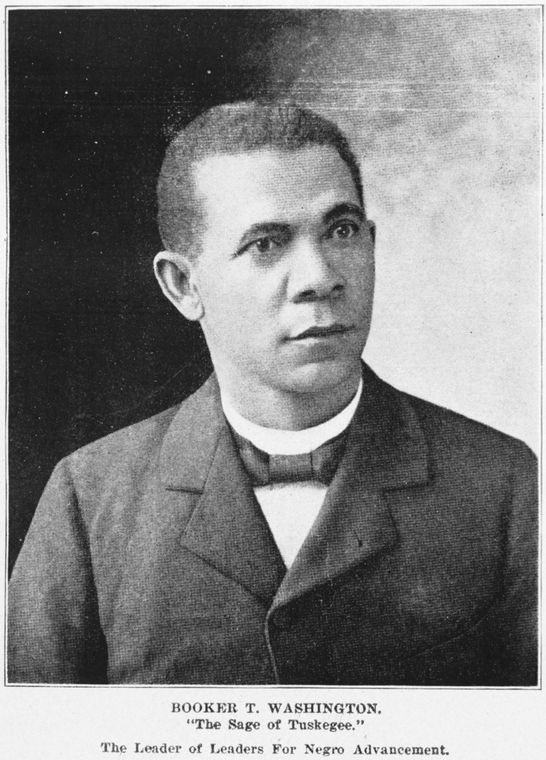
In 1903 he published The Souls of Black Folk, a book of essays. An early version of its opening essay had appeared in the Atlantic Monthly in 1897. The book described the “double-consciousness” of Black Americans, told the history of the Freedmen’s Bureau, and openly challenged the approach of Booker T. Washington.
The problem of the twentieth century is the problem of the color-line,—the relation of the darker to the lighter races of men in Asia and Africa, in America and the islands of the sea.
Niagara and the NAACP
In 1905, after talks with Washington failed, Du Bois and William Monroe Trotter founded the Niagara Movement, which demanded full civil and political rights for Black Americans. In 1909 he signed the call for the national conference that led to the National Association for the Advancement of Colored People. When the organization took its name in 1910, Du Bois recommended the word “Colored” over “Negro.” He joined as an officer, the only Black member of its board, and founded its magazine, The Crisis.
He edited The Crisis from 1910 to 1934. During World War I he urged Black Americans, in a July 1918 editorial titled “Close Ranks,” to set aside their grievances while the war lasted. He also traveled to France to document the experiences of Black American soldiers. In 1919 he helped organize a Pan-African Congress in Paris, one of a series of Pan-African meetings he took part in between 1900 and 1945. At the 1945 congress in Manchester, England, he cochaired the opening session. He resigned from the NAACP in 1934 and returned to Atlanta University, and in 1935 he published Black Reconstruction in America.
Later years
Du Bois returned to the NAACP in 1944 as director of special research and was forced out in 1948. In February 1951, at eighty-two, he was indicted under the Foreign Agents Registration Act over the Peace Information Center’s circulation of the Stockholm Peace Appeal. At trial that November, he and his colleagues were acquitted. The same year he married Shirley Graham. From 1952 to 1958 the State Department refused him a passport.
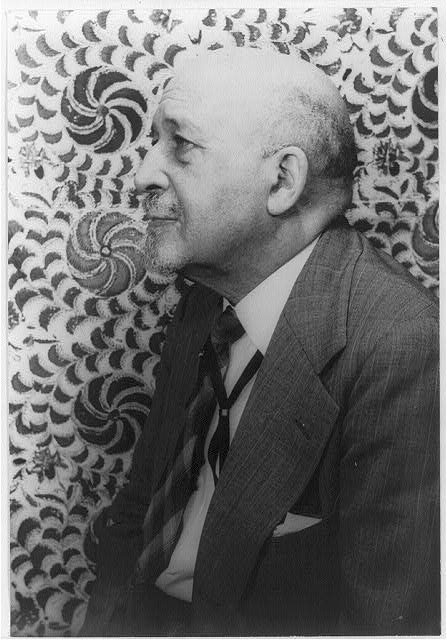
In 1961 he accepted an invitation from Ghana’s leader, Kwame Nkrumah, to direct the Encyclopedia Africana, a project he had long contemplated. That October he joined the American Communist Party and left for Ghana, where he became a citizen in 1963. Over his long life he wrote about twenty books. In 1963 the University of Ghana gave him an honorary degree. He died in Accra on August 27, 1963, the day before the March on Washington, and was given a state funeral.