Fifteenth of seventeen
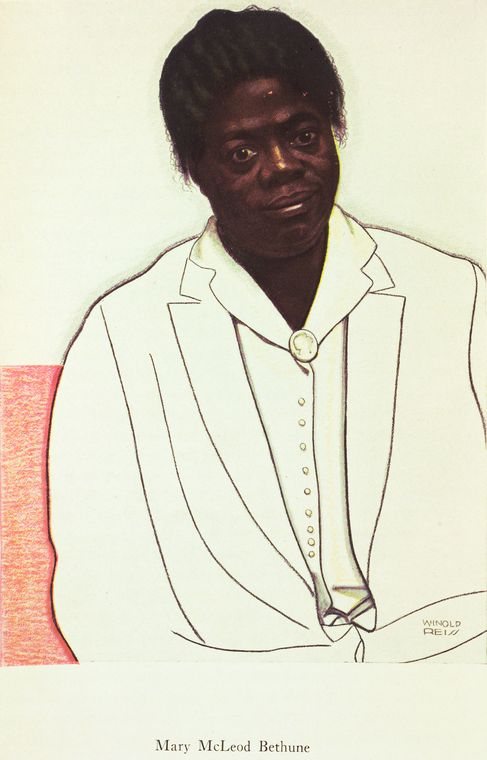
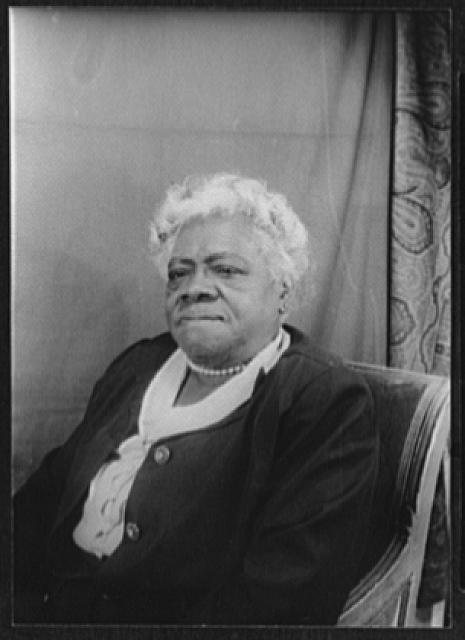
Mary Jane McLeod was born on July 10, 1875, in Mayesville, South Carolina, the fifteenth of seventeen children of Samuel and Patsy McLeod. Her parents had been enslaved.
Though the family was poor, they sent her to the Trinity Presbyterian Mission School in Mayesville. With a patron’s help she went on to Scotia Seminary in Concord, North Carolina, from 1887 to 1894, and then to the Bible institute in Chicago now known as Moody Bible Institute, where she was the only Black student. Much of her schooling prepared her for missionary work abroad.
A school in Daytona
She taught in Mayesville, Augusta and Sumter. In 1898 she married Albertus Bethune, and their son, Albert, was born within a year. The couple later separated but never divorced, and she kept the name Bethune. From 1899 to 1903 she worked at a mission school in Palatka, Florida.
On October 3, 1904, in Daytona Beach, she opened the Daytona Educational and Industrial Training School for Negro Girls. She began with $1.50 and five girls, plus her own son. In 1911 she also opened a hospital, McLeod Hospital. In 1923 the school merged with the Cookman Institute, a school for men in Jacksonville, and in 1931 it became Bethune-Cookman College. She served as its president until 1942.
The Freedom Gates are half-ajar. We must pry them fully open.
A national voice
In 1924 Bethune was elected the eighth president of the National Association of Colored Women, and she served until 1928. She took part in White House conferences on children’s welfare and health under Presidents Calvin Coolidge and Herbert Hoover.
On December 5, 1935, she founded the National Council of Negro Women and became its first president, serving until 1949. In 1935 the NAACP also gave her its highest honor, the Spingarn Medal.
In Roosevelt’s Washington
In 1935 President Franklin D. Roosevelt brought Bethune to Washington as a special adviser to the National Youth Administration, a New Deal agency that offered work and training to young people. In 1936 he named her director of its Division of Negro Affairs. She was the first African American woman to head a federal agency.
Bethune also gathered Black officials of the New Deal into the Federal Council on Negro Affairs, which the press called the “Black Cabinet.” The group had no direct power over policy, but it worked to widen opportunities for Black Americans in federal programs and jobs, and Bethune became its leader in all but name. She worked closely with Eleanor Roosevelt and met with the president at the White House several times.
During World War II she pressed for Black women to be admitted to the armed forces, and she helped select candidates for the Women’s Army Corps. In 1945 she went to San Francisco for the conference that wrote the United Nations Charter, as one of three representatives of the NAACP. She was the only African American woman there. In 1952 President Harry S. Truman sent her as his personal representative to the inauguration of William V. S. Tubman as president of Liberia.
Last years
In 1943 Bethune and the council bought a house at 1318 Vermont Avenue in Washington. It became the council’s first national headquarters, and she lived there until 1949. In 1979 it opened to the public as a museum and the National Archives for Black Women’s History, and it is now the Mary McLeod Bethune Council House National Historic Site.
Bethune died at her home on the Bethune-Cookman campus in Daytona Beach on May 18, 1955. That August, Ebony published her “My Last Will and Testament,” a statement of the values she hoped to pass on. On July 10, 1974, a statue of Bethune was unveiled in Lincoln Park in Washington, the first monument to an African American, and to a woman, in a public park in the nation’s capital. In 2022 Florida placed her statue in National Statuary Hall in the U.S. Capitol, the first Black American chosen by a state for the collection.