Born on the Burroughs farm
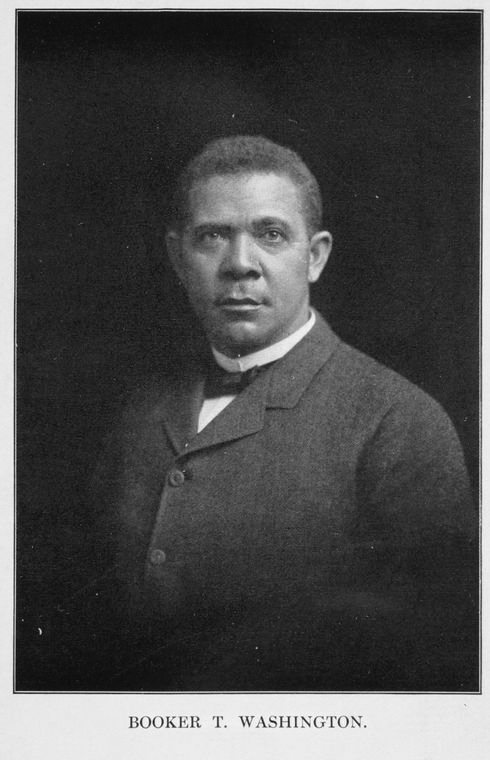
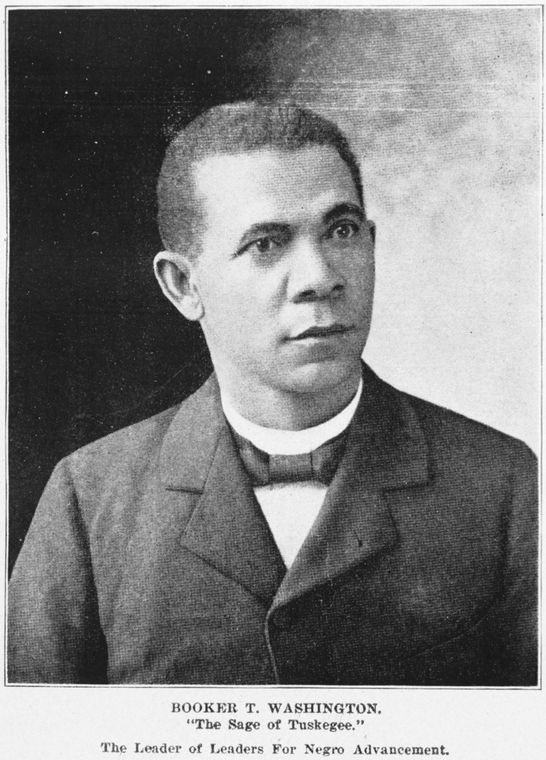
Booker T. Washington was born into slavery on the Burroughs tobacco farm in Franklin County, Virginia. He later wrote that he was not sure of the exact place or date of his birth, and believed the year was 1858 or 1859. Historians now usually give April 5, 1856. His mother was the plantation cook, and the family lived in a one-room log cabin.
In April 1865, when he was about nine, the people enslaved on the farm gathered in front of the Burroughs house to hear the Emancipation Proclamation read. As Washington remembered it, a stranger, “a United States officer, I presume,” read “a rather long paper.” “My mother, who was standing by my side, leaned over and kissed her children, while tears of joy ran down her cheeks.”
Work and school
After freedom the family moved to Malden, West Virginia, where his mother’s husband lived, and the boy was put to work in the salt furnaces. A job that began at four in the morning left time for school later in the day.
In 1872, at sixteen, he set out for Hampton Normal and Agricultural Institute in Virginia, walking the last miles when his money ran out. He paid his way by working as a janitor and graduated in 1875. He taught in Malden, studied briefly at Wayland Seminary in Washington, D.C., and in 1879 returned to Hampton as an instructor.
I have learned that success is to be measured not so much by the position that one has reached in life as by the obstacles which he has overcome while trying to succeed.
Tuskegee
In 1881 Washington was chosen to head a new normal school for Black students in Tuskegee, Alabama. The state gave $2,000 a year for teachers’ salaries, but no land or buildings. The school opened on July 4, 1881, with about thirty students, holding its first classes in an old building owned by Butler Chapel A.M.E. Zion Church. Students cleared the land and put up the school’s first buildings themselves.
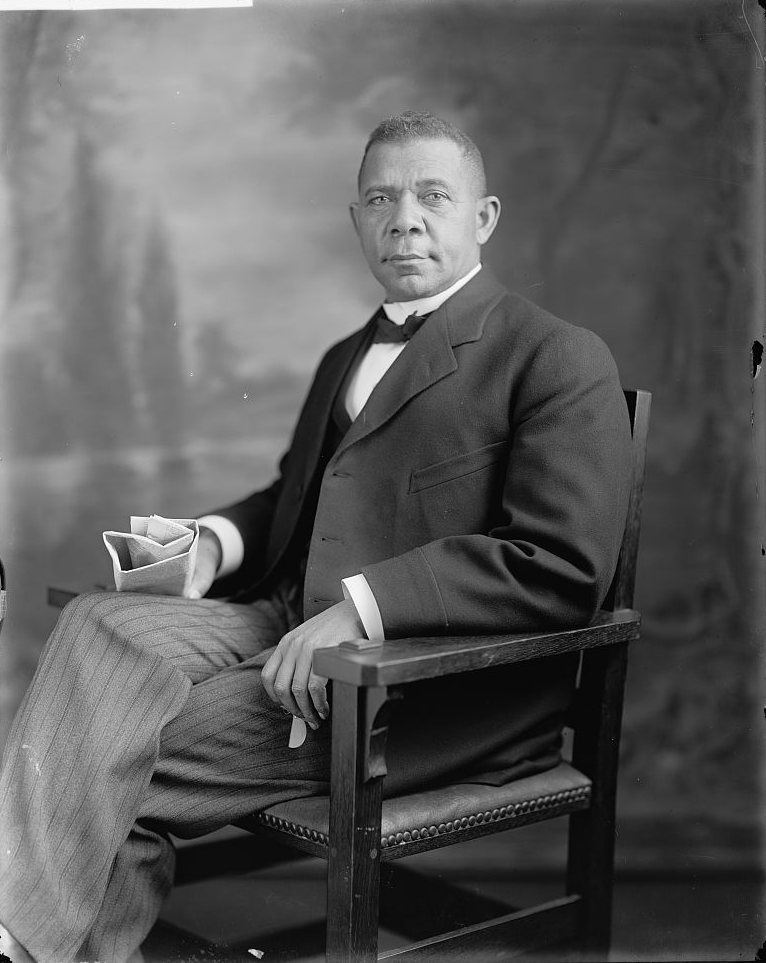
Washington led Tuskegee for the rest of his life and traveled widely to raise money for it from wealthy donors, among them Julius Rosenwald. He married three times: Fanny Smith in 1882, Olivia Davidson in 1885, and Margaret Murray in 1892. His first two wives died within a few years of their marriages.
The Atlanta address
On September 18, 1895, Washington spoke at the Cotton States and International Exposition in Atlanta. He urged Black Southerners to “cast down your bucket where you are” and build up their farms, trades and businesses in the South. In purely social matters, he said, Black and white Southerners could be “separate as the fingers,” yet “one as the hand” in all things essential to progress.
The speech made him nationally famous. Harvard gave him an honorary degree in 1896. In 1900 he founded the National Negro Business League, and in 1901 he published his autobiography, Up from Slavery. On October 16, 1901, he dined at the White House with President Theodore Roosevelt. The White House Historical Association calls it the first time an African American was entertained there, and the dinner set off a storm of angry editorials, especially in the South.
Debate and legacy
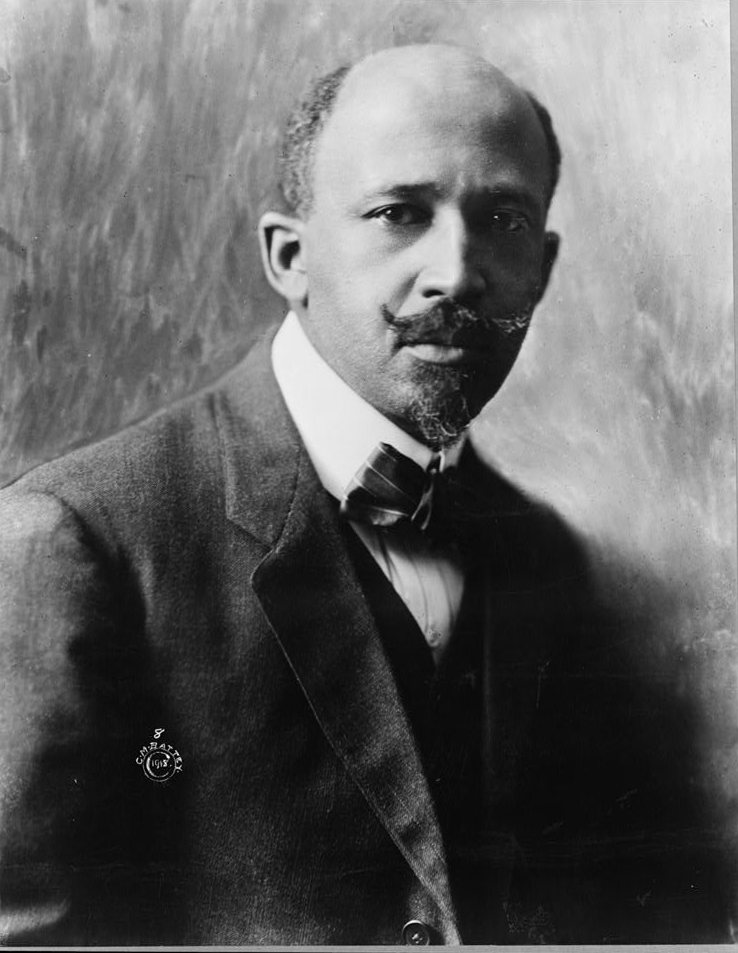
Washington’s approach had strong critics. W.E.B. Du Bois, who gave the Atlanta speech its lasting nickname, the “Atlanta Compromise,” objected to its emphasis on industrial training over higher education and civil rights. In 1903 Du Bois answered Washington in The Souls of Black Folk, and he called Washington’s network of allies and influence the “Tuskegee Machine.” After talks between the two men failed in 1904, Du Bois helped found the Niagara Movement, which demanded full civil and political rights.
Washington used his influence in other ways, too. When President Roosevelt dismissed Black soldiers after an incident in Brownsville, Texas, Washington lobbied him to reverse the decision, without success. In private, he quietly funded organizations that fought lynching, a fact that became known only later.
Washington died at Tuskegee on November 14, 1915, at the age of fifty-nine. He is buried on the campus of the school he built.