Born Isabella
Sojourner Truth was born Isabella around 1797 in Ulster County, New York. Her parents, James and Betsey, were enslaved on the Hardenbergh estate, and Dutch was her first language. She could never read or write, so her story survives in the words of others and in the testimony she dictated.
When she was about nine, Isabella was sold with a flock of sheep for $100 to John Neely, who lived near Kingston. In 1808 she was sold to Martinus Schryver, a tavern keeper in Port Ewen. About eighteen months later, in 1810, John Dumont of West Park, New York, bought her. She remained enslaved by Dumont for about sixteen years.
Walking away
New York set July 4, 1827, as the day its remaining enslaved people would go free. Dumont promised to free Isabella a year early, then broke his word. Late in 1826 she left, carrying her infant daughter, Sophia. “I walked away by day-light,” she later told him.
She found shelter with Isaac and Maria Van Wagenen, who paid Dumont twenty dollars for her services for the rest of the year and five for the child. Soon after, she learned that her five-year-old son, Peter, had been sold illegally and taken to Alabama. She took the case to court in Kingston, and in 1828 the court ordered Peter returned to her.
In 1829 she moved to New York City with Peter and worked as a housekeeper.
I have plowed and reaped and husked and chopped and mowed, and can any man do more than that?
Sojourner
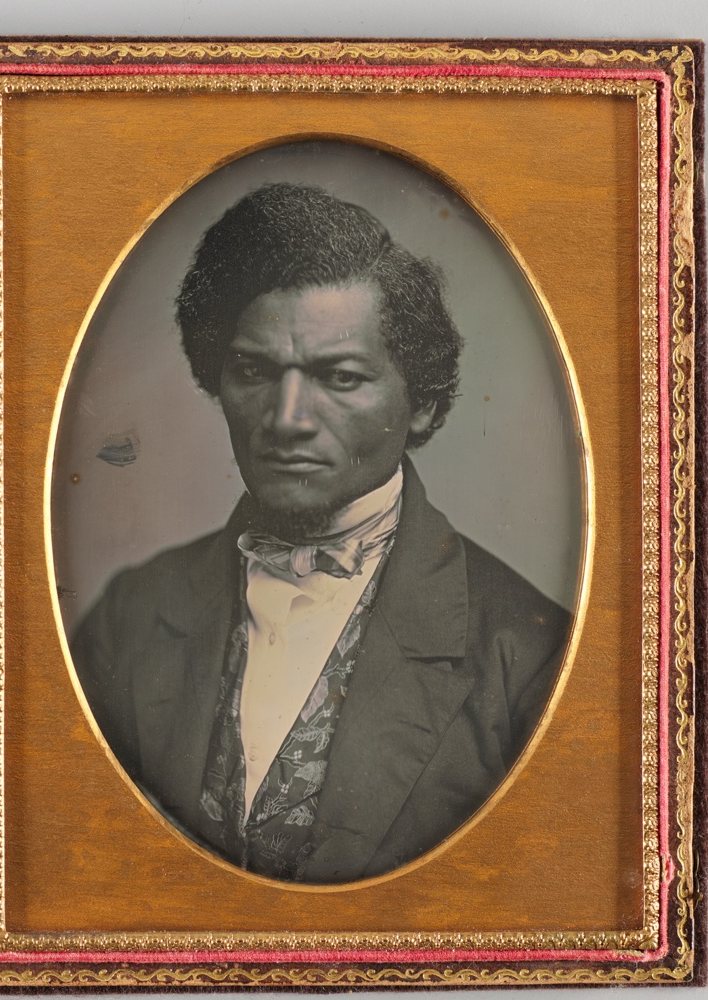
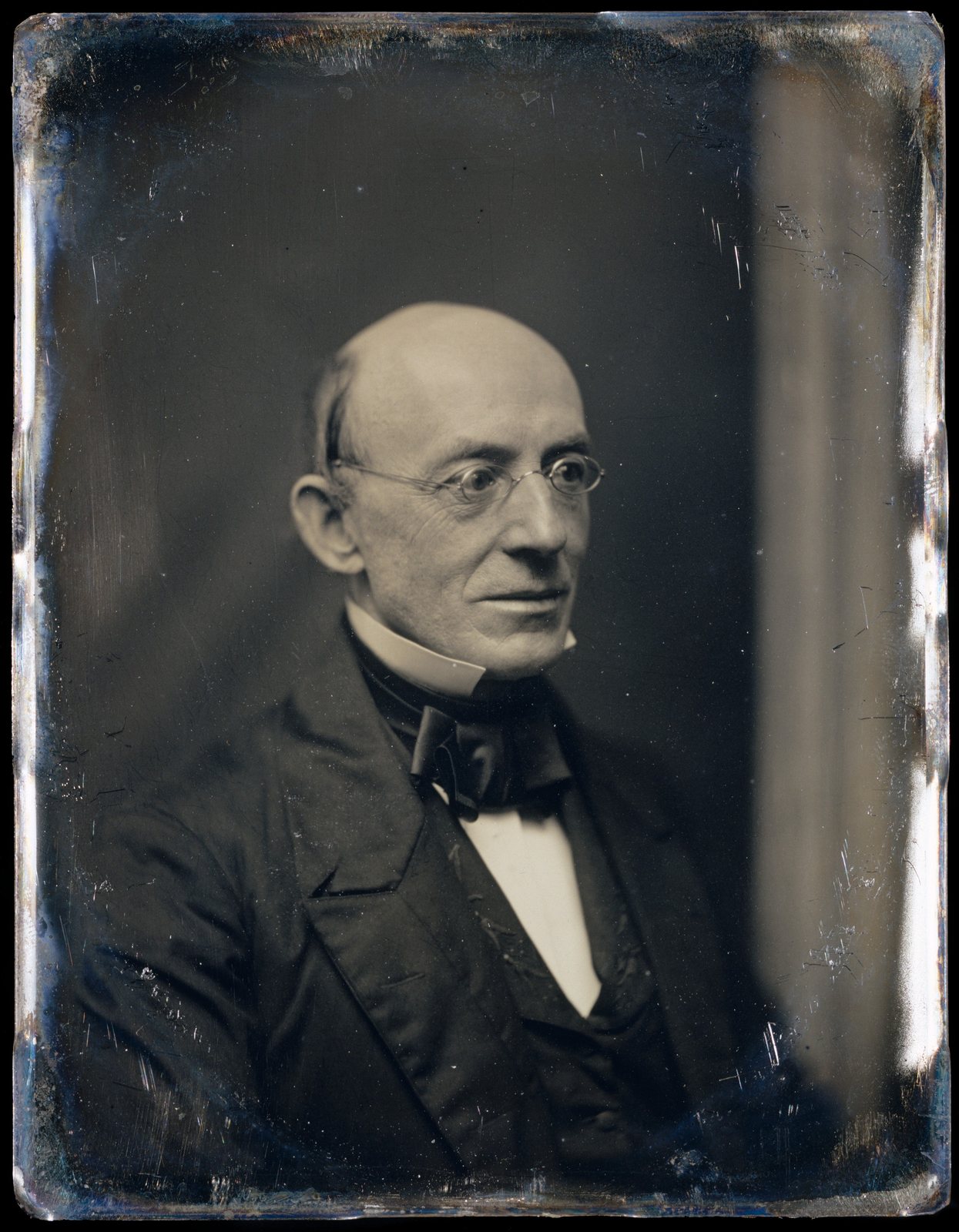
On the morning of June 1, 1843, she told a friend that her name was no longer Isabella but Sojourner, and that she was going east. Asked why, she answered, “The Spirit calls me there, and I must go.” As Sojourner Truth she preached and spoke against slavery. In 1844 she joined the Northampton Association of Education and Industry in Massachusetts, where she met William Lloyd Garrison and Frederick Douglass.
She dictated her life story to Olive Gilbert, and Garrison published it in 1850 as the Narrative of Sojourner Truth. That year she spoke at the first National Women’s Rights Convention, in Worcester. In May 1851 she addressed the Women’s Rights Convention in Akron, Ohio. Marius Robinson, who attended, printed her speech in the Anti-Slavery Bugle three weeks later. By his account she came forward and asked the president, “May I say a few words?” She told the convention she could do as much work as any man. “As for intellect,” she said, “all I can say is, if woman have a pint and man a quart, why can’t she have her little pint full?” The better-known version, with the refrain “Ain’t I a woman?”, was published by Frances Gage in 1863.
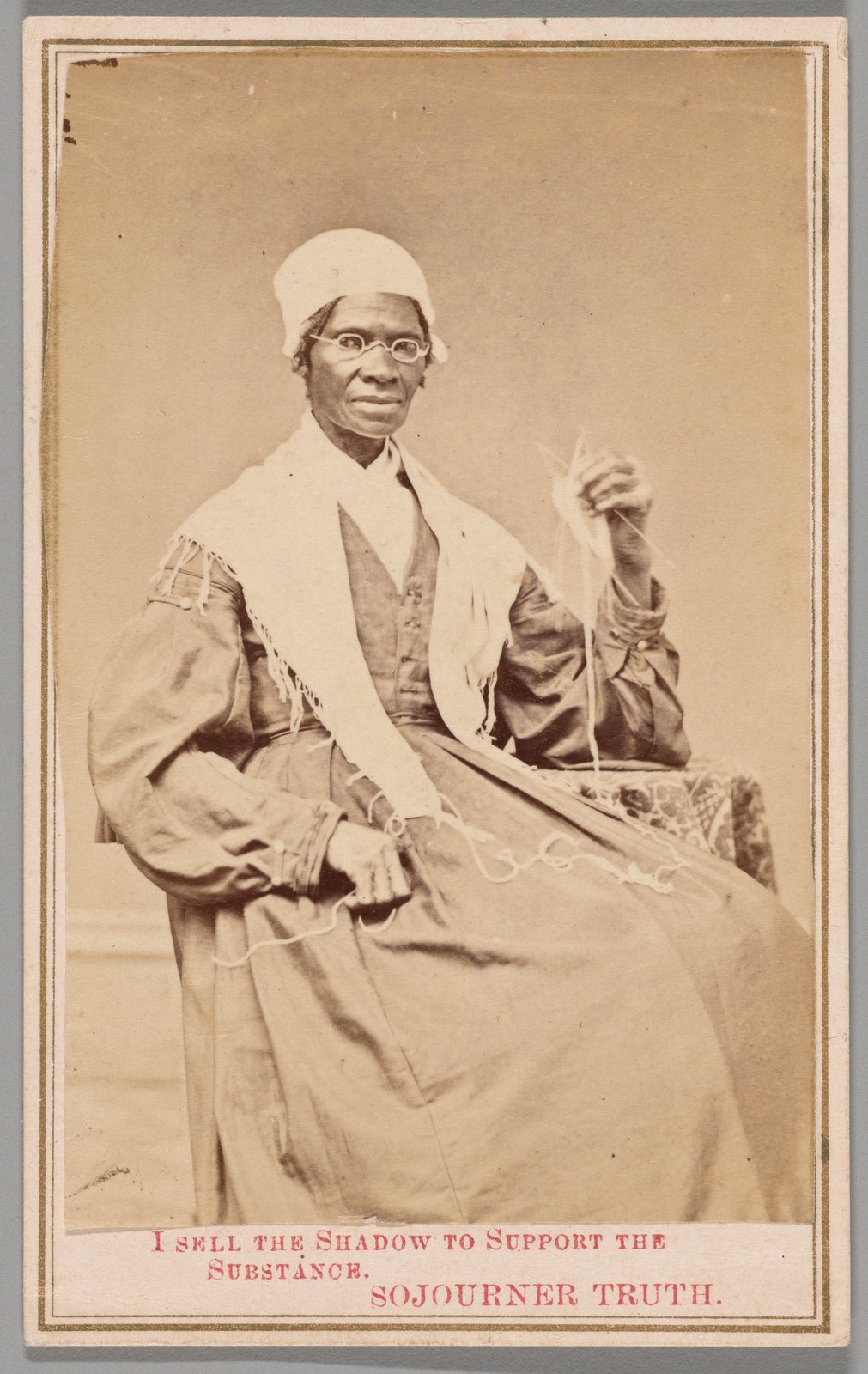
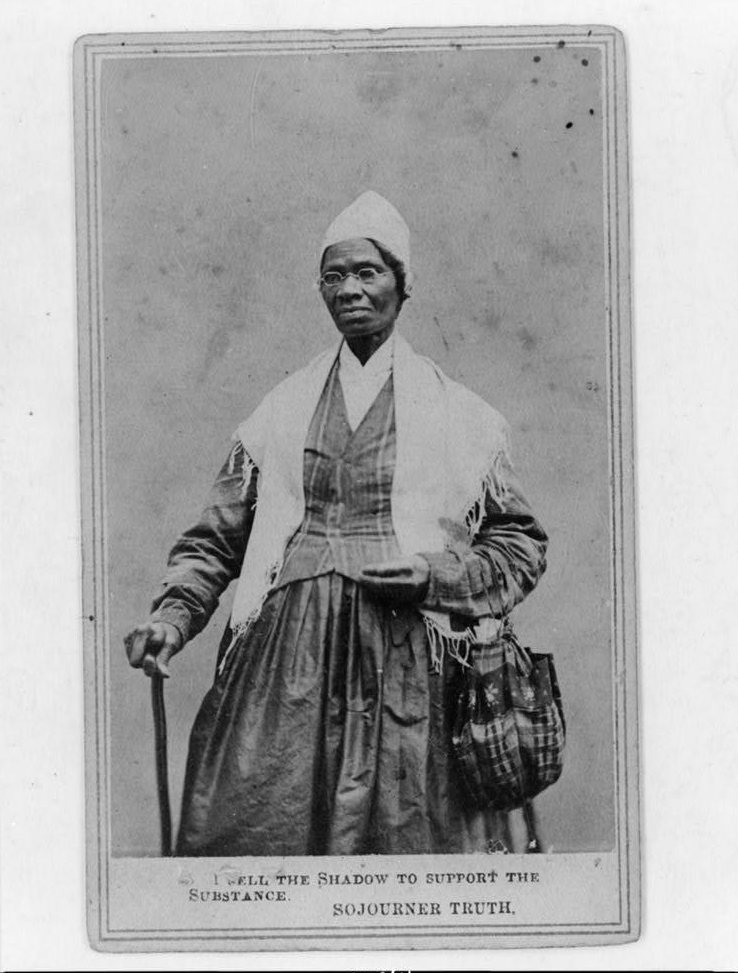
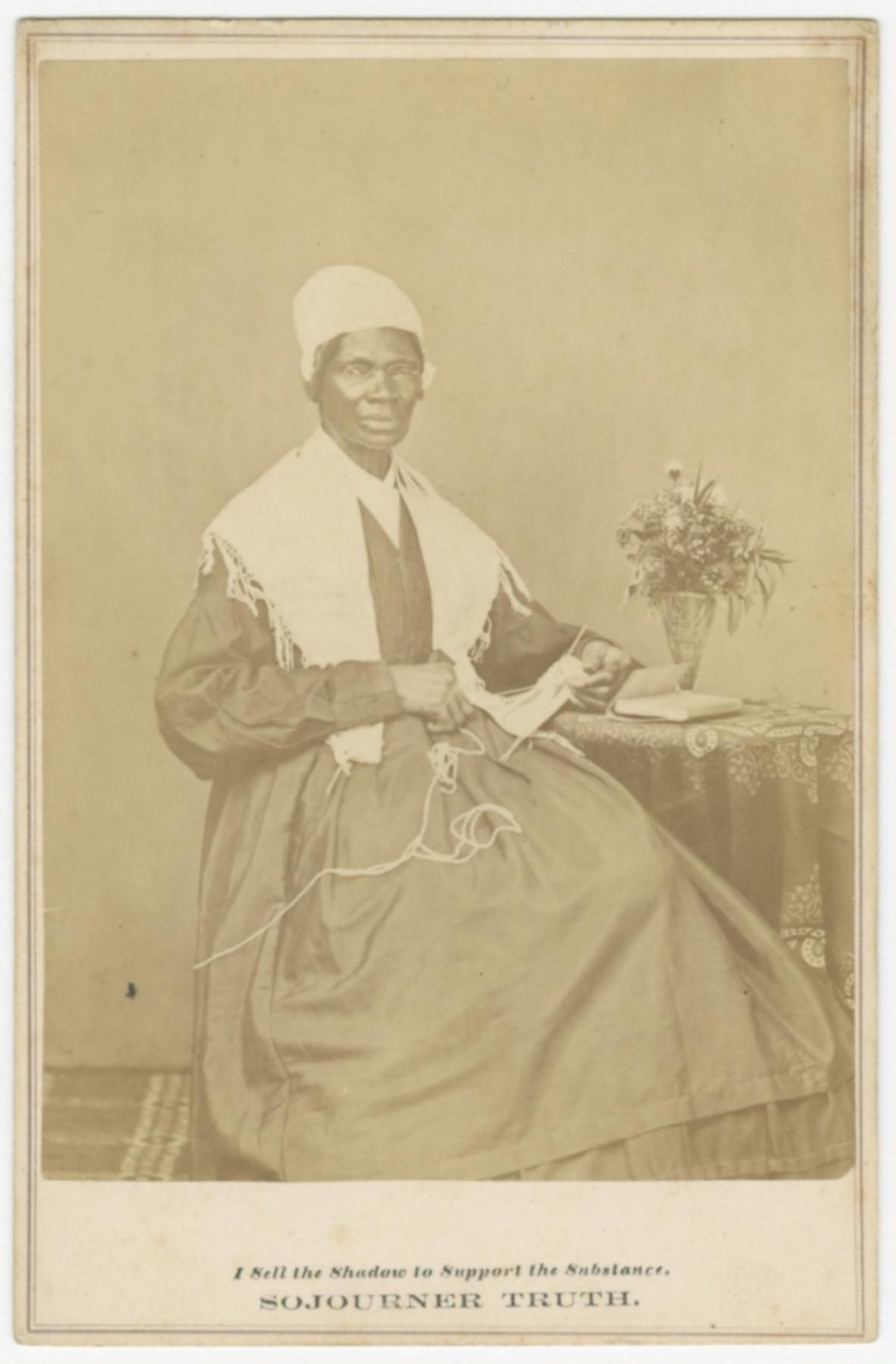
In 1857 she moved to Michigan, first to Harmonia and later to Battle Creek. She supported her work in part by selling portrait cards of herself, which she copyrighted in her own name in 1864.
War, and the work that followed
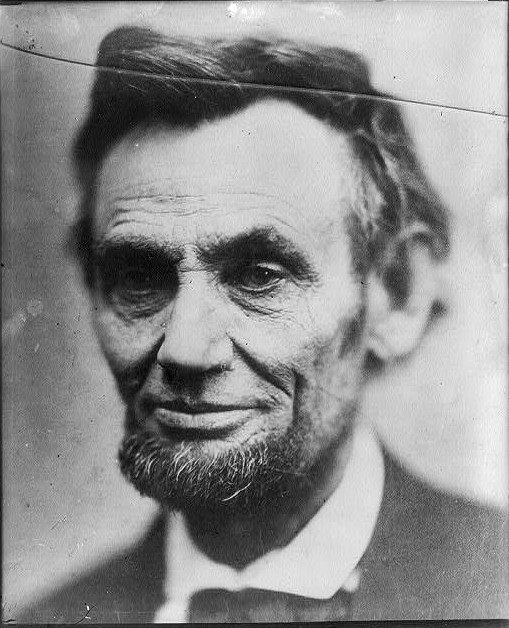
During the Civil War Truth gathered supplies for Union troops and recruited Black men for the Union Army. In 1864 she went to Washington. She lived for more than a year at Freedman’s Village, a settlement for newly freed people on the Arlington estate, where she counseled and taught residents and helped them claim their rights. On October 29, 1864, she met President Lincoln. In a letter that November she described how he rose, shook her hand and told her he had heard of her many times. He signed her book “For Aunty Sojourner Truth.”
She worked with the National Freedmen’s Relief Association and the Freedmen’s Bureau until 1868. In Washington she pressed charges against a streetcar conductor who tried to keep her off his car, and she won. From 1870 she campaigned for federal land in the West for freed people, and she met President Grant. The campaign did not succeed. In 1872, back in Battle Creek, she tried to vote on Election Day and was turned away.
Sojourner Truth died at her home in Battle Creek on November 26, 1883. She is buried in Oak Hill Cemetery there. In 2009 a bronze bust of Truth was unveiled in Emancipation Hall at the U.S. Capitol, the first sculpture in the Capitol to honor an African American woman.