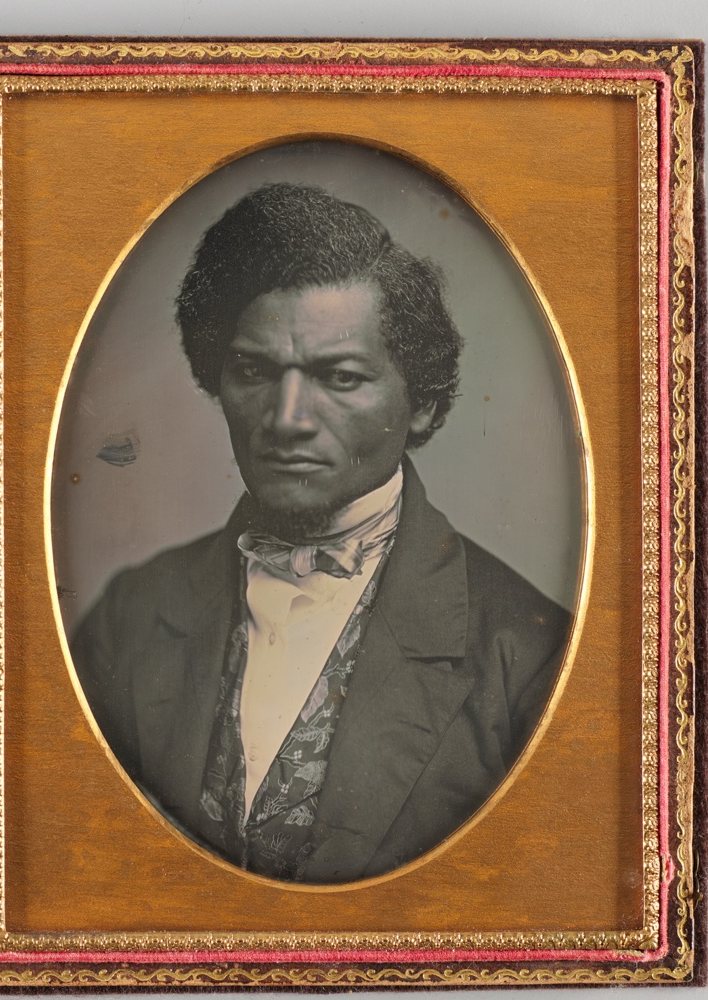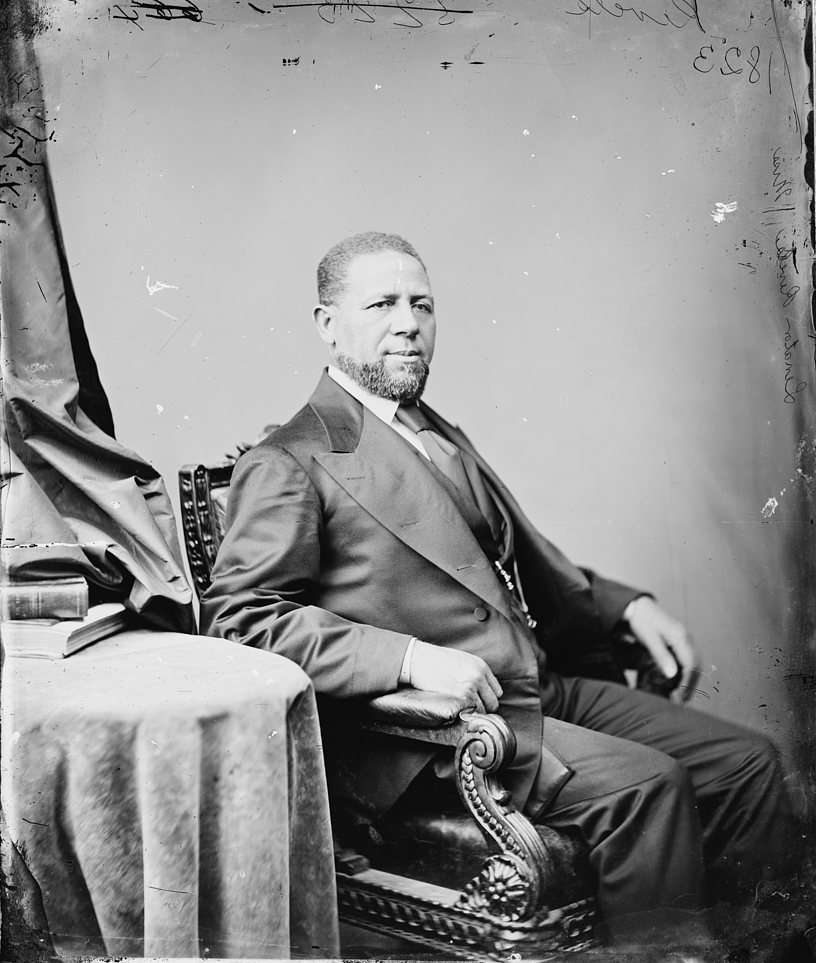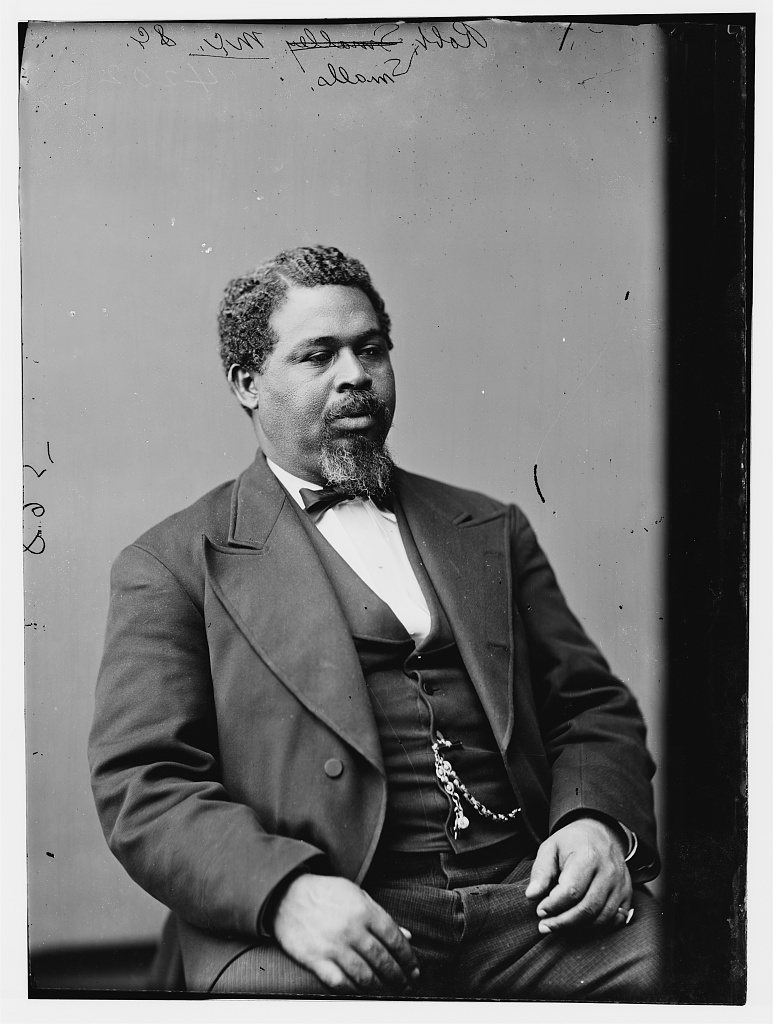
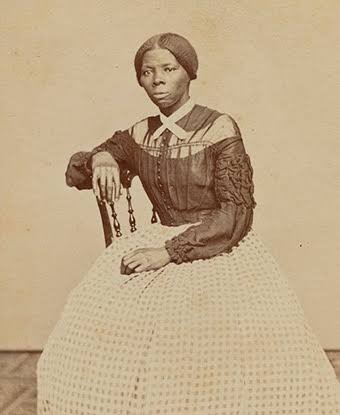
Studio photograph of Robert Smalls, seated, in a dark suit and vest, from his years in Congress.

Robert Smalls

1839 – 1915

Seized a Confederate ship in 1862 and sailed his family to freedom; later a congressman.

Draft for committee review

Beaufort and Charleston

Robert Smalls was born into slavery in Beaufort, South Carolina, on April 5, 1839. His mother, Lydia Polite, was enslaved by Henry McKee. They lived in a cabin behind McKee’s house at 511 Prince Street.

When Robert was twelve, McKee sent him to Charleston to be hired out. He worked as a hotel waiter and then on the city’s docks. Around 1856 he married Hannah Jones. South Carolina did not recognize the marriage. By 1862 he was working as a pilot aboard the Planter, an armed steamer in Confederate service.

The Planter

On the night of May 12, 1862, the Planter’s captain, C. J. Relyea, was ashore. Around three in the morning on May 13, Smalls and the enslaved crew fired the boilers and took the ship from its wharf. They stopped at another wharf to take on members of their families. Smalls wore a captain’s hat as a disguise.

The Planter steamed past Castle Pinckney, Fort Johnson, Fort Sumter and Fort Moultrie, sounding the expected signals. Beyond the last Confederate guns, the crew lowered the Confederate flag and raised a white one. They surrendered the ship to the USS Onward of the Union blockade. Sixteen people had escaped slavery. “Failure and detection would have been certain death,” a congressional report later said. “Fearful was the venture, but it was made.”

The Planter carried four guns as cargo besides its own. The next day it was sent to Flag Officer Samuel F. Du Pont at Port Royal. The Confederacy offered a $4,000 reward for Smalls’s capture. On May 30, 1862, Congress voted the crew half the value of the ship and cargo. Smalls received $1,500.

I tell you the Negro is the bone and sinew of your country and you cannot do without him.

Robert Smalls, speech “On the Suffrage” at the South Carolina Constitutional Convention of 1895, printed in Speeches at the Constitutional Convention (1896)

In Union service

Du Pont kept Smalls on as the Planter’s pilot. He also piloted other Union vessels. In April 1863 he was aboard the ironclad Keokuk when enemy fire sank it, and he was wounded. On December 1, 1863, enemy fire drove the Planter’s white captain from his post, and Smalls brought the ship out of danger. He was then made its captain, and he held the post until the ship was sold in 1866. By his own count he took part in seventeen military engagements. The government never paid him the full value of the Planter. In 1900 Congress voted him $5,000 more.

In January 1864 he used his prize money to buy the McKee house in Beaufort at a tax sale. Later that year he took the Planter to Philadelphia for repairs. On December 30, 1864, he was put off a Philadelphia streetcar that barred Black riders. He helped organize a boycott, and in 1867 the city’s streetcars were desegregated.

Statesman

Smalls had gone to the Republican National Convention as a delegate in 1864, the first of seven he attended. After the war he was a delegate to South Carolina’s constitutional convention in 1868 and won a seat in the state House that year. In 1870 he moved to the state Senate. In 1873 he was made a major general in the state militia, and he was known afterward as General Smalls.

In 1874 he won election to the U.S. House of Representatives with nearly 80 percent of the vote. He served five terms in all.

In 1877, after Democrats regained control of the state, a state court convicted him of taking a bribe as a state senator. Even some of his opponents said the case was weak. In 1879 Governor William Simpson pardoned him, in an amnesty that also ended federal election-law cases against South Carolina Democrats. He lost the 1880 race, contested the result, and was seated in July 1882. In 1884 he won a special election after the death of Representative Edmund Mackey. In 1889 President Benjamin Harrison named him collector of customs at Beaufort. Apart from a break in the 1890s, he held the post until he was forced out in 1913. Near the end, he wrote to Booker T. Washington that he would leave it “with credit to myself, my family, and my race.”

In 1895 Smalls was one of six Black delegates to a convention that rewrote the state constitution. He spoke against its plan to strip Black citizens of the vote. The convention adopted it anyway. Robert Smalls died at his home in Beaufort in February 1915.
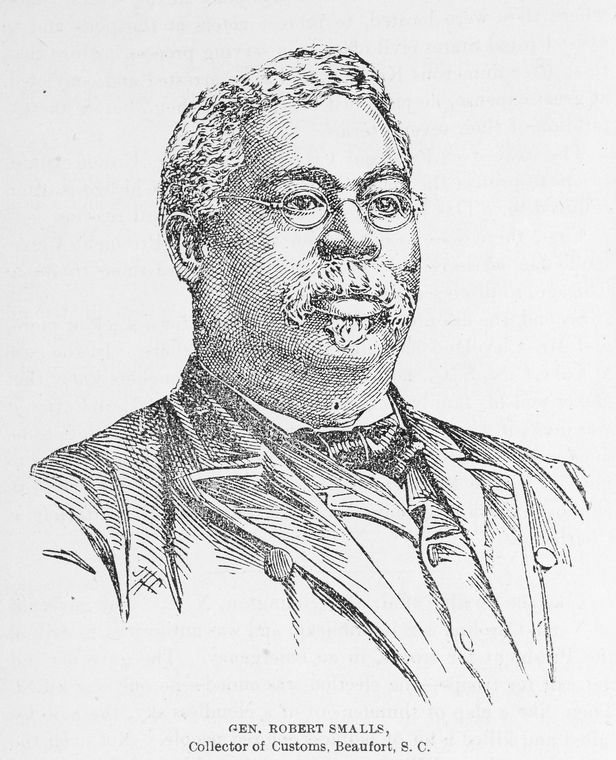
In the archive

Portraits

Key moments

Robert Smalls’s life in time

  1. 1839

    Born April 5 in Beaufort, South Carolina.

  2. c. 1851

    Sent to Charleston, at about twelve, to be hired out.

  3. c. 1856

    Marries Hannah Jones.

  4. 1862

    May 13: carries the Planter and sixteen people out of Charleston to the Union fleet.

  5. 1863

    Wounded aboard the Keokuk in April; brings the Planter out from under fire on December 1 and is made its captain.

  6. 1864

    Buys the McKee house in Beaufort; challenges segregated streetcars in Philadelphia.

  7. 1868

    Delegate to the state constitutional convention; elected to the state House.

  8. 1870

    Elected to the South Carolina Senate.

  9. 1874

    Elected to the U.S. House of Representatives.

  10. 1889

    Appointed collector of customs at Beaufort.

  11. 1895

    Opposes the disfranchisement of Black voters at the state constitutional convention.

  12. 1915

    Dies in February at his home in Beaufort.

June 19, 1865

Connection to Juneteenth

On June 19, 1865, Union troops at Galveston, Texas, announced General Order No. 3. It declared free the people still enslaved in Texas. The Emancipation Proclamation had promised that freedom two and a half years before. In Texas it waited for the army. Robert Smalls had no part in the events at Galveston, but his life runs through nearly every chapter of the story that Juneteenth tells.

He did not wait for any proclamation. On May 13, 1862, three years before Galveston and more than seven months before the Emancipation Proclamation took effect, he carried sixteen people, his own wife and children among them, out of Charleston harbor aboard the Planter. He then went to Washington and helped persuade President Lincoln to let Black men serve in the Union Army; not long after, the War Department authorized the enlistment of 5,000 formerly enslaved men. By the war’s end almost 200,000 Black soldiers and sailors had served the Union, and it was the Union Army that carried freedom to Texas.

On April 14, 1865, the United States flag was raised again over Fort Sumter, and steamers crowded with spectators gathered in the harbor. Among them was the Planter, with Smalls in command. One witness described her three decks as crowded almost to suffocation with freedpeople. The ship that had carried sixteen people out of slavery returned, two months before Galveston, carrying freed men and women to witness the Union’s return.

After the war Smalls was a delegate to the convention that wrote South Carolina’s new constitution in 1868, and he served in Congress during Reconstruction, when the nation tried to give lasting legal force to the freedom announced in Texas. Decades later he called the 1868 document “the best Constitution of any one of the Southern States.” He said so in 1895, standing in the convention that replaced it, as he argued against the measures that took the vote from Black citizens. He lost that fight.

His life holds the Juneteenth story whole: freedom claimed before it was granted, freedom celebrated when it came, and the long, unfinished work of keeping it.

Sources

Where this story comes from

Every fact on this page is drawn from the sources listed here. Quotations are given as they were first recorded.

  1. Robert Smalls (opens in a new tab)National Park Service
  2. The “Planter”: A Strike for Freedom (opens in a new tab)National Park Service, Reconstruction Era National Historical Park
  3. Planter (ship history) (opens in a new tab)Naval History and Heritage Command
  4. Smalls, Robert (opens in a new tab)Naval History and Heritage Command
  5. Smalls, Robert, by Edward A. Miller Jr. (opens in a new tab)South Carolina Encyclopedia, University of South Carolina
  6. Robert Smalls, in Black Americans in Congress, 1870–2007 (opens in a new tab)U.S. House of Representatives / Government Publishing Office
  7. Robert Smalls (Biographical Directory of the U.S. Congress entry) (opens in a new tab)Voteview, UCLA
  8. Collector of Customs (opens in a new tab)U.S. Customs and Border Protection
  9. Speeches at the Constitutional Convention, by Gen. Robt. Smalls (1896) (opens in a new tab)Project Gutenberg
  10. Biographical Sidebar: Robert Smalls (opens in a new tab)Digital History, University of Houston
  11. Robert Smalls (opens in a new tab)American Battlefield Trust
  12. The Search for Planter: The Ship that Escaped Charleston and Carried Robert Smalls to Destiny, by Bruce G. Terrell, Gordon P. Watts and Timothy J. Runyan (2014) (opens in a new tab)NOAA Office of National Marine Sanctuaries
  13. Black Soldiers in the Civil War (opens in a new tab)National Archives, Educator Resources
  14. Juneteenth: General Order No. 3 (opens in a new tab)National Archives
  15. Robert Smalls: A Resource Guide (opens in a new tab)Library of Congress
  16. Robert Smalls, captain of the gun-boat “Planter” (1862) (opens in a new tab)Library of Congress
  17. Robert Smalls, S.C. M.C. Born in Beaufort, SC, April 1839 (opens in a new tab)Library of Congress
  18. Gen. Robert Smalls, Collector of Customs (1899) (opens in a new tab)The New York Public Library

Portraits: Brady-Handy Photograph Collection, Between 1870 and 1880; Colored American Publishing Co, 1899 (date uncertain). Public domain in the United States.