Born free
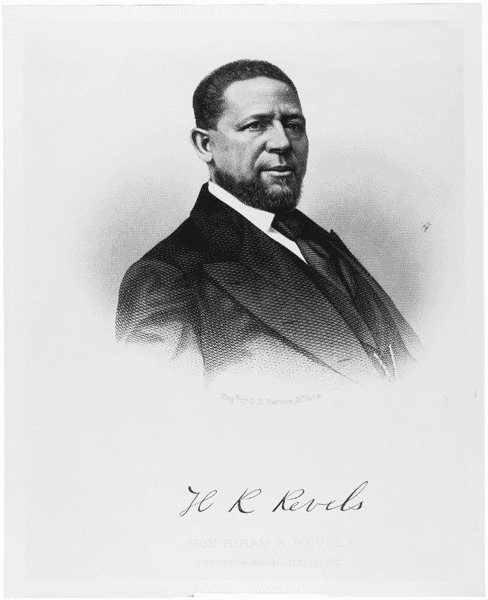
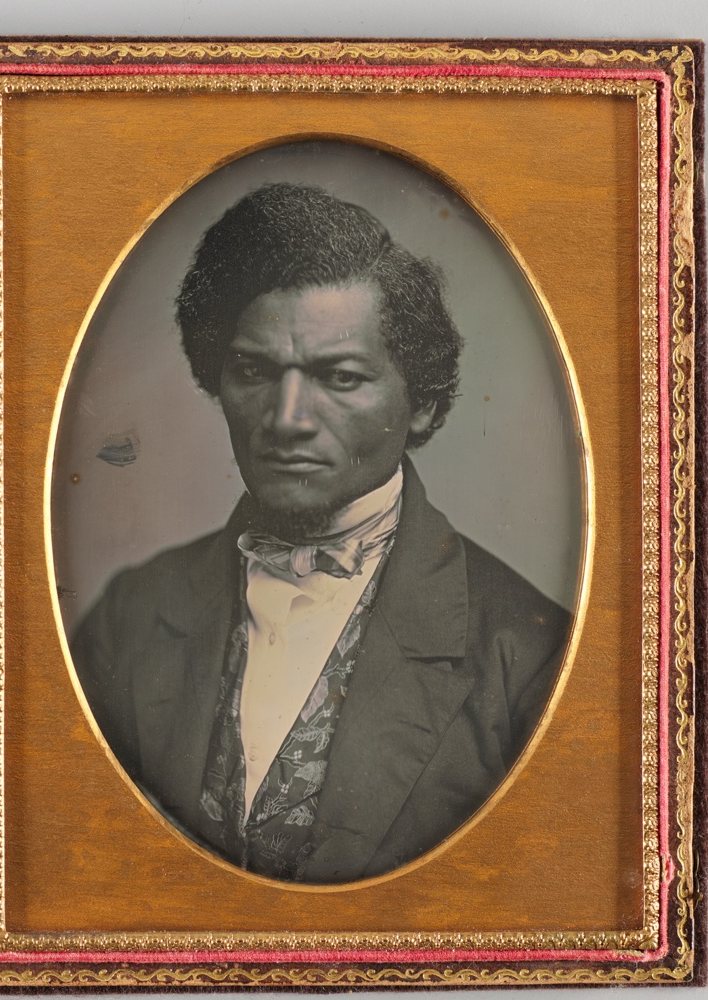
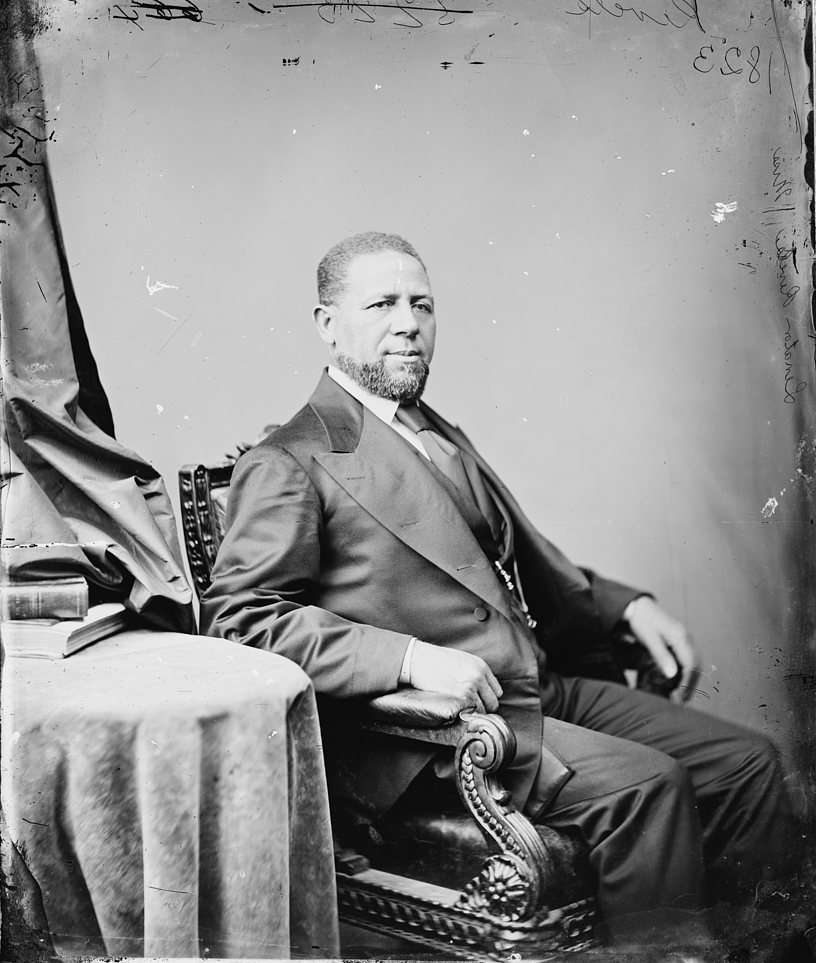
Hiram Rhodes Revels was born free in Fayetteville, North Carolina. Most sources give the date as September 27, 1827; some give 1822. His father was a Baptist preacher. As a boy he attended a school taught by a free Black woman, and as a young man he worked as a barber in Lincolnton, in a shop run by his brother.
North Carolina offered him little more schooling, so in 1844 he went north. He studied at a Quaker seminary in Liberty, Indiana, and at a seminary for Black students in Darke County, Ohio. From 1855 to 1857 he attended Knox College in Galesburg, Illinois.
Preacher, teacher, chaplain
In 1845 Revels was ordained a minister of the African Methodist Episcopal Church. For years he preached to Black congregations in the Midwest and the border states. In 1854, a year after he began serving a church in St. Louis, he was jailed for preaching to the Black community.
When the Civil War began in 1861, he was a pastor in Baltimore, where he also led a school. He helped recruit two Black regiments in Maryland for the Union Army, founded a school for freedpeople in St. Louis, and served as chaplain to a Black regiment in Mississippi.
In 1866 he settled in Natchez, Mississippi, and preached to a large congregation. In 1868 the military governor appointed him to the Natchez city council, and in 1869 he was elected to the Mississippi state senate.
I maintain that the past record of my race is a true index of the feelings which today animate them.
A seat in the Senate
In January 1870 Mississippi’s Reconstruction legislature met to fill the state’s two U.S. Senate seats, empty since its senators withdrew in 1861. Black legislators, about a quarter of the body, insisted that one seat go to a Black Republican. Revels had impressed the members with the prayer that opened their session, and on January 20 they elected him, 85 to 15, to the shorter term, which ran to March 1871. The seat had been held by Albert G. Brown. It is often said, wrongly, to have been Jefferson Davis’s.
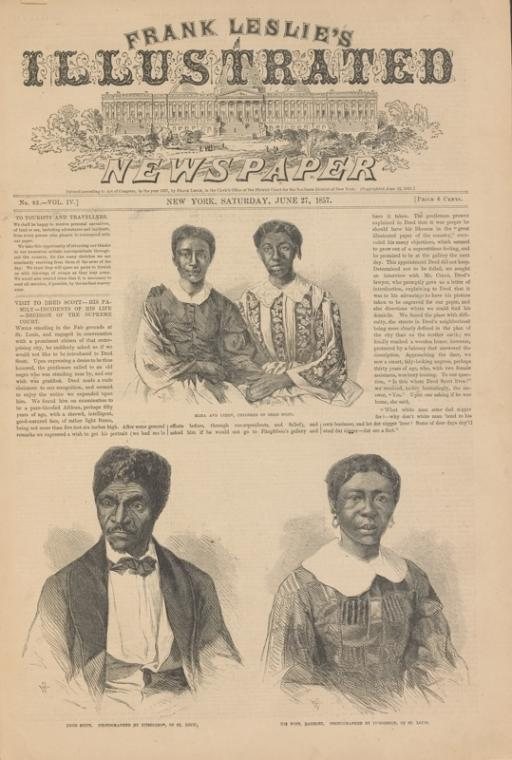
When Revels reached Washington, Democratic senators challenged his right to sit. The Constitution requires nine years of citizenship, and citing the Supreme Court’s 1857 Dred Scott decision, they argued that he could not have been a citizen before 1866. His supporters answered that the Fourteenth Amendment had overturned Dred Scott, and that Revels had voted in Ohio long before 1866. On February 25, 1870, the Senate voted 48 to 8 to seat him, and he took the oath that day.
In the Senate
Revels served on the Committee on Education and Labor and the Committee on the District of Columbia. On March 16, 1870, in his first major speech, he spoke against a House amendment to the bill readmitting Georgia that would have left in office state officials who had barred Black men from holding office. He spoke against segregation, backed a measure to let Black children attend the District of Columbia’s white schools, and supported restoring political rights to former Confederates.
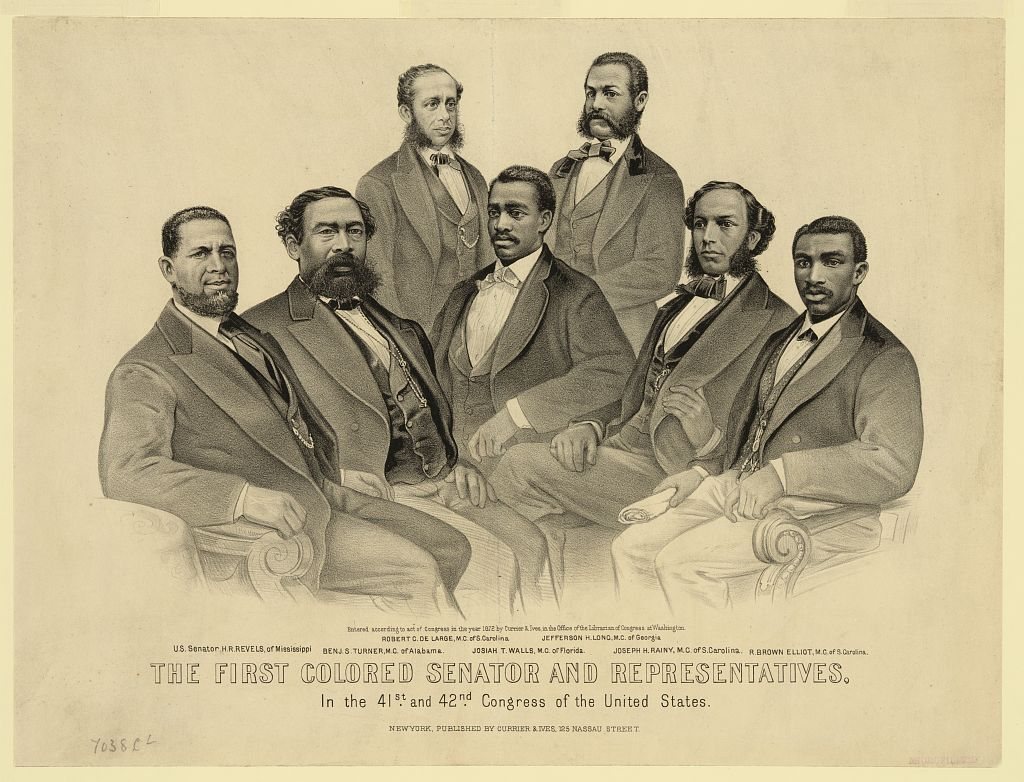
His term ended on March 3, 1871. He was the first African American to serve in either house of Congress; Joseph H. Rainey of South Carolina became the first Black member of the House later that year. On a speaking tour he was introduced as “the Fifteenth Amendment in flesh and blood.”
Alcorn and after
In 1871 Revels became the first president of Alcorn University, Mississippi’s new college for Black students, and in 1873 he briefly served as acting Mississippi secretary of state. He was a political ally of James L. Alcorn, the moderate Republican for whom the college was named, and a rival of Adelbert Ames, who led the party’s Radical wing. After Ames became governor in 1874, Revels lost the Alcorn presidency.
In the violent and disputed campaign of 1875, Revels supported several Democratic candidates against the Ames administration, which he charged with corruption, while still calling himself a Republican. In that election white Democrats won control of the state through violence, fraud and the intimidation of Black voters. After they took office, Revels was restored to Alcorn in 1876, and he led the college until 1882.
In his later years he lived in Holly Springs, Mississippi, and continued his work in the church. On January 16, 1901, while attending a church conference in Aberdeen, Mississippi, he died of a stroke. He is buried in Hillcrest Cemetery in Holly Springs.