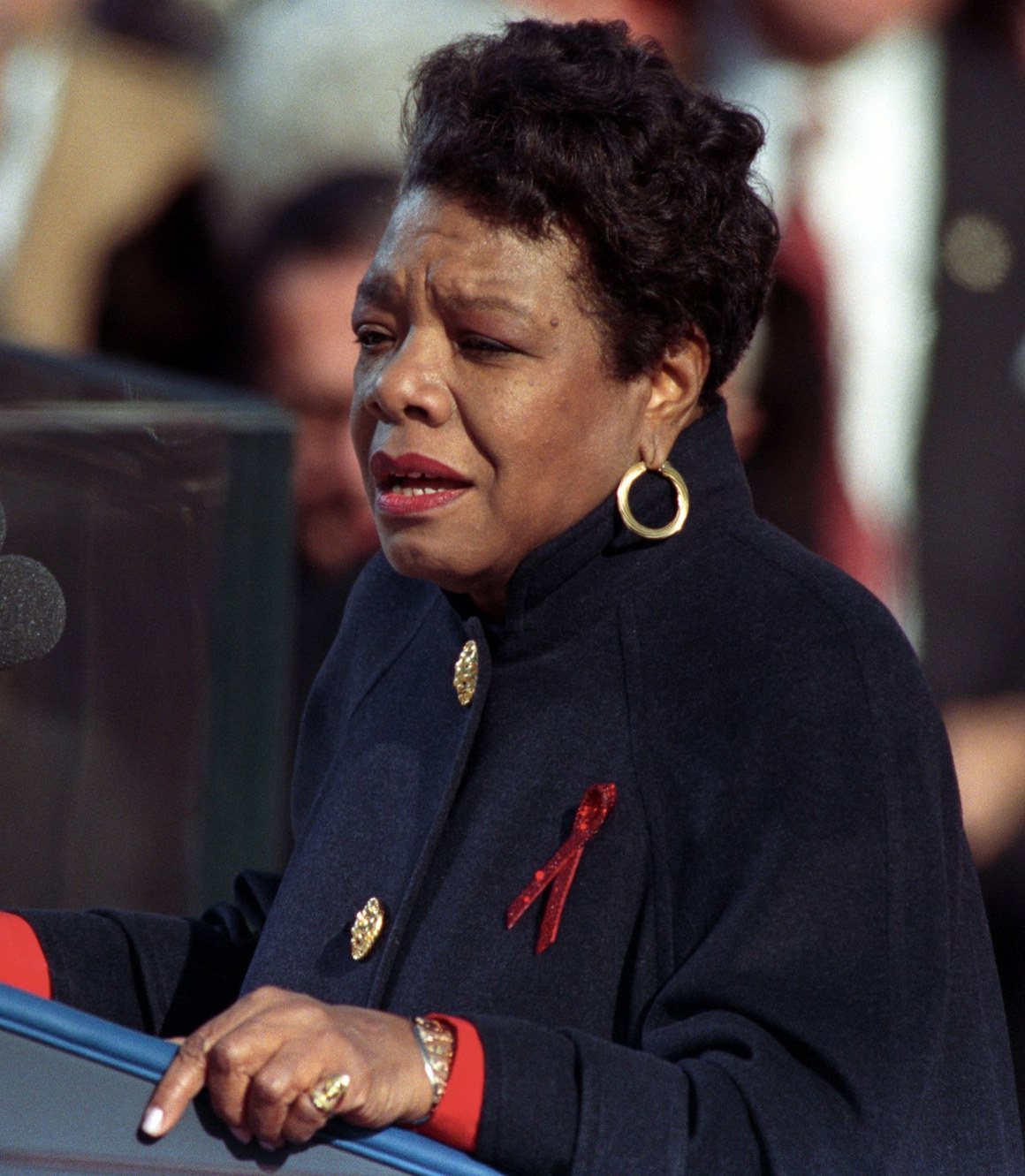
Color photograph of Maya Angelou in a dark coat with a red ribbon pin and gold hoop earrings, speaking at a podium with microphones before an inaugural crowd.

Maya Angelou

1928 – 2014

Poet and memoirist whose words reached the whole nation.

Draft for committee review

Marguerite of Stamps

Maya Angelou was born Marguerite Annie Johnson in St. Louis, Missouri, on April 4, 1928. Her parents, Bailey and Vivian Baxter Johnson, divorced when she was small, and in 1931 she and her older brother, Bailey Jr., were sent to Stamps, Arkansas. There they lived with their father’s mother, Annie Henderson, who ran a grocery store in the Black section of the segregated town. Her brother gave her the name Maya.

At about eight, during a stay with her mother in St. Louis, she was sexually assaulted by her mother’s boyfriend. He was convicted and released, and soon afterward he was found dead. Believing that her testimony had caused his death, she stopped speaking for several years. She returned to her grandmother in Stamps.

Many lives

As a teenager she moved to San Francisco to live with her mother. During the Second World War, at fifteen, she worked as a conductor on the city’s streetcars, one of the first Black women in the job. Her son, Guy, was born in 1944, weeks after she finished high school.

She sang, danced and worked many jobs to support him. In the early 1950s, while singing at a San Francisco club, she took the stage name Maya Angelou, joining her brother’s name for her to a form of the surname of her first husband, Tosh Angelos. In 1954 and 1955 she toured Europe and Africa with a production of Porgy and Bess, playing the role of Ruby. In New York she studied dance and joined the Harlem Writers Guild.

It is imperative that each of us knows that we own this country because we’ve already been paid for.

Maya Angelou, remarks at the dedication of the African Burial Ground National Monument memorial, New York City, October 5, 2007

In the movement

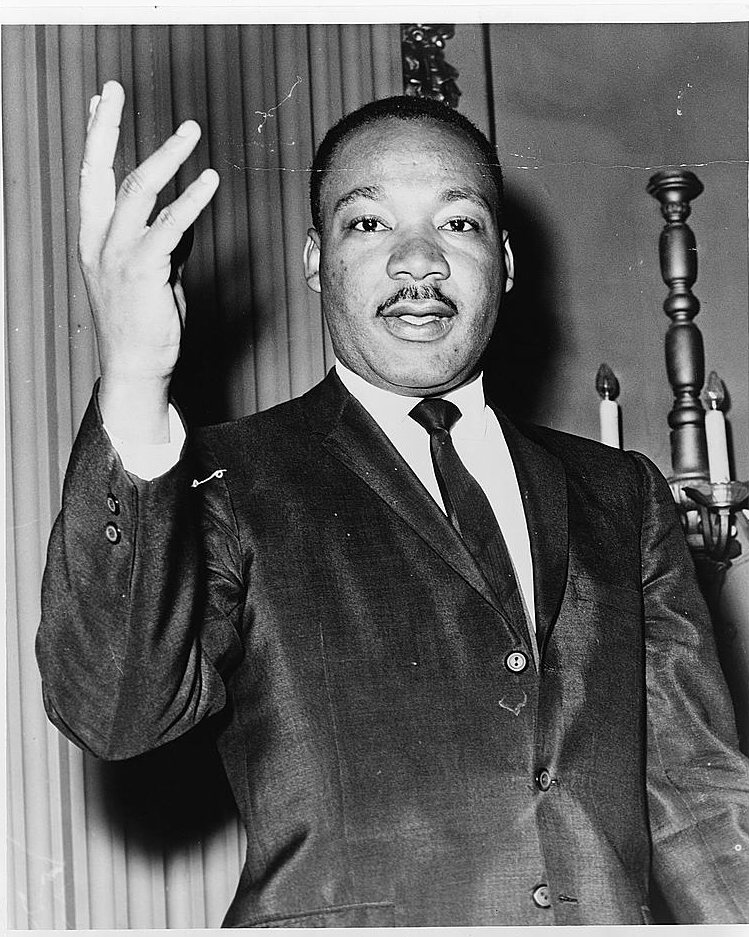
In early 1960, after hearing Martin Luther King Jr. speak in Harlem, Angelou and Godfrey Cambridge staged a revue, Cabaret for Freedom, to raise money for his Southern Christian Leadership Conference. That year she became the SCLC’s northern coordinator, running its New York office. She left the post in January 1961.

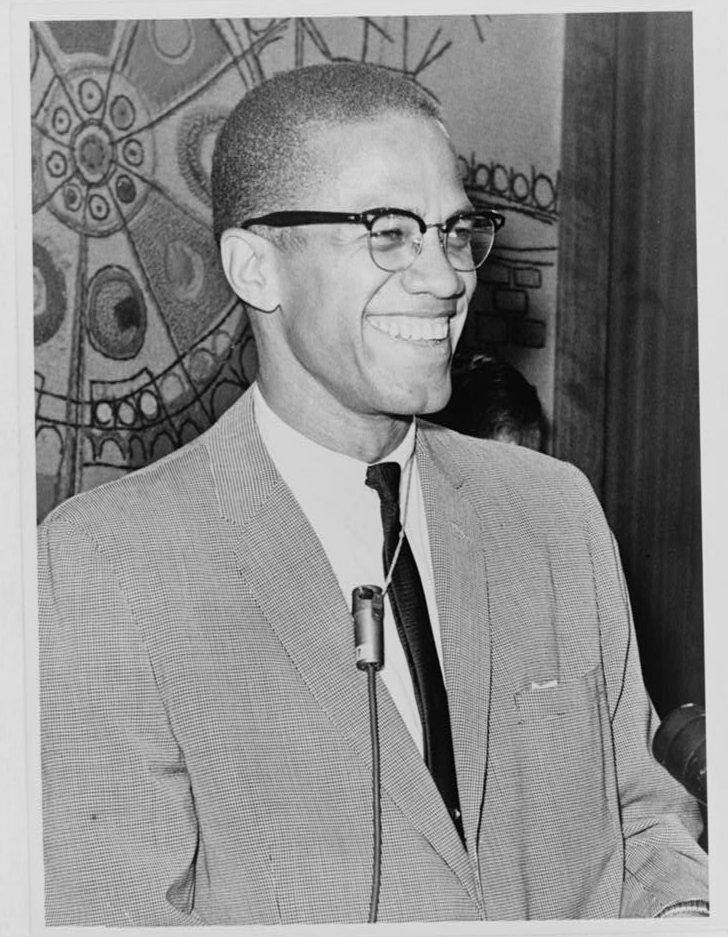
In the early 1960s she lived in Cairo, where she edited the Arab Observer, and then in Ghana, where she worked at the University of Ghana and as a journalist. In Ghana she met Malcolm X. After she returned to the United States she worked with him in his Organization of Afro-American Unity, until he was assassinated in February 1965. On April 4, 1968, her fortieth birthday, Dr. King was assassinated in Memphis.

After Dr. King’s death, encouraged by the novelist James Baldwin, she began to write about her childhood. I Know Why the Caged Bird Sings appeared in 1969 and was nominated for the National Book Award. Its title comes from “Sympathy,” a poem by Paul Laurence Dunbar. It was the first of seven books about her life, the last of them Mom & Me & Mom (2013).

A voice for the nation

Her first book of poems, Just Give Me a Cool Drink of Water ’fore I Diiie (1971), was nominated for the Pulitzer Prize. She wrote the screenplay and score for the film Georgia, Georgia (1972), was nominated for a Tony Award for her role in Look Away (1973), and was nominated for an Emmy for her role in the television series Roots (1977).

In 1981 she accepted a lifetime teaching post at Wake Forest University in Winston-Salem, North Carolina, which named her its first Reynolds Professor of American Studies in 1982. She held the post for the rest of her life, and in 1985 she directed Macbeth for the university theatre.

On January 20, 1993, at President Bill Clinton’s first inauguration, she recited her poem “On the Pulse of Morning.” She was the second poet to take part in a presidential inauguration, after Robert Frost in 1961, and her recording of the poem won a Grammy Award. In 1995 she wrote a poem for the 50th anniversary of the United Nations.

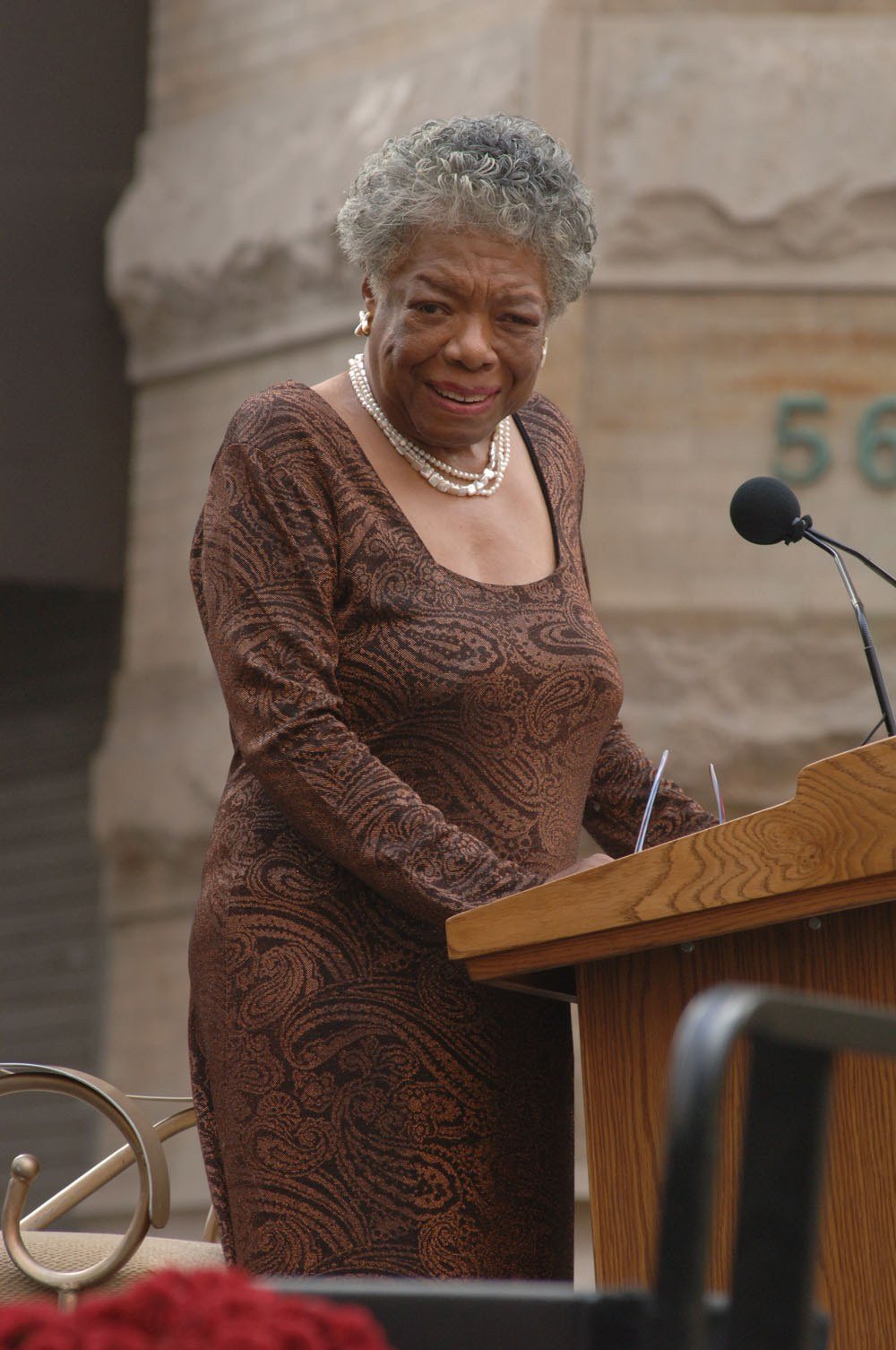
On October 5, 2007, she spoke at the dedication of the memorial at the African Burial Ground National Monument in New York City, which honors free and enslaved Africans buried there in the 1600s and 1700s. She received the National Medal of Arts in 2000, and President Barack Obama presented her the Presidential Medal of Freedom at the White House on February 15, 2011. Maya Angelou died at her home in Winston-Salem on May 28, 2014. She was 86.
In the archive

Three portraits

  • Color photograph of Maya Angelou in a dark coat with a red ribbon pin and gold hoop earrings, speaking at a podium with microphones before an inaugural crowd. (view at the source, opens in a new tab)
    January 20, 1993Maya Angelou recites her poem "On the Pulse of Morning" at President Bill Clinton's first inauguration.Sharon Farmer, White House Photograph Office (Clinton Administration). William J. Clinton Presidential Library, National Archives (42-WHPO-P00162-24).
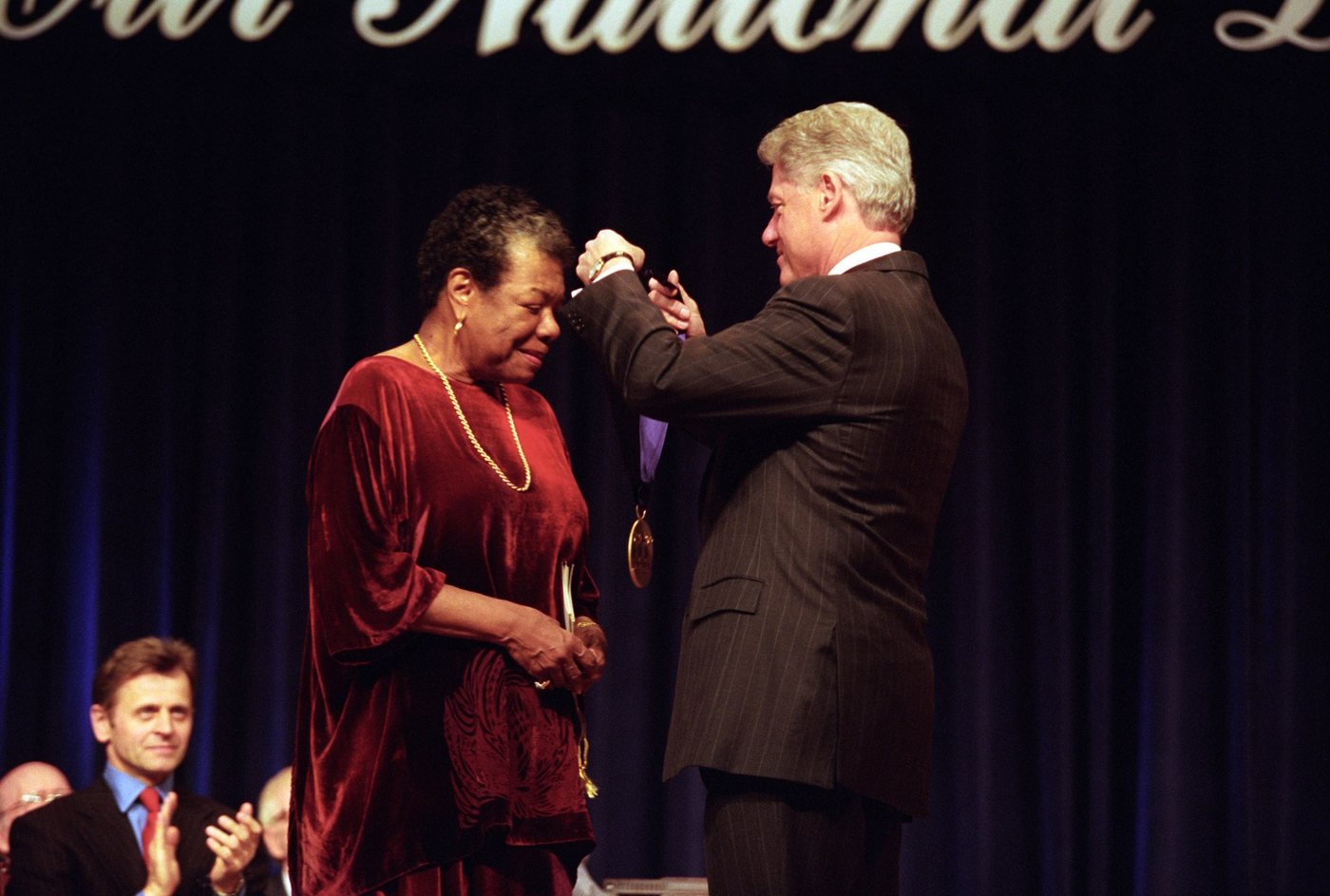
  • Color photograph of President Clinton placing a medal around the neck of Maya Angelou, who wears a deep red velvet outfit, on a stage before a dark blue curtain as guests applaud. (view at the source, opens in a new tab)
    December 20, 2000President Bill Clinton presents Maya Angelou with a National Medal at the 2000 arts and humanities awards ceremony.Ralph Alswang, White House Photograph Office (Clinton Administration). William J. Clinton Presidential Library, National Archives (42-WHPO-P87562-02).
  • Color photograph of a smiling, gray-haired Maya Angelou in a brown patterned dress and pearl necklace, standing at a wooden lectern outdoors in front of a stone building. (view at the source, opens in a new tab)
    October 2007Maya Angelou speaks at the dedication of the new memorial at the African Burial Ground National Monument in New York City.Tami Heilemann, U.S. Department of the Interior staff photographer. National Archives, Records of the Office of the Secretary of the Interior (48-DPA-10-05-07_SOI_K_ABG_email).

Key moments

Maya Angelou’s life in time

  1. 1928

    Born Marguerite Annie Johnson on April 4 in St. Louis, Missouri.

  2. 1931

    Sent with her brother to their grandmother in Stamps, Arkansas.

  3. 1944

    Her son, Guy, is born in San Francisco.

  4. 1954

    Begins touring Europe and Africa with Porgy and Bess.

  5. 1960

    Stages Cabaret for Freedom and becomes northern coordinator of the SCLC.

  6. 1965

    Malcolm X, with whom she had been working, is assassinated.

  7. 1969

    Publishes I Know Why the Caged Bird Sings.

  8. 1982

    Named Wake Forest University’s first Reynolds Professor of American Studies.

  9. 1993

    January 20: recites “On the Pulse of Morning” at President Clinton’s inauguration.

  10. 2000

    Receives the National Medal of Arts.

  11. 2007

    October 5: speaks at the dedication of the African Burial Ground memorial in New York.

  12. 2014

    Dies May 28 at her home in Winston-Salem, North Carolina.

June 19, 1865

Connection to Juneteenth

Maya Angelou was born in 1928, sixty-three years after Union troops at Galveston announced that the enslaved people of Texas were free, and she grew up in Stamps, Arkansas, a town divided by the color line. She had no part in the events of 1865. But one of the most remembered scenes she ever wrote shows how the memory of emancipation lived on among the children of the segregated South.

In I Know Why the Caged Bird Sings (1969) she recalls her eighth grade graduation in 1940 at the Lafayette County Training School. A white speaker from Texarkana spoke of the new equipment coming to the white school and suggested that the Black boys might aspire to be athletes. The class sat humiliated. Then the valedictorian, Henry Reed, began to sing “Lift Ev’ry Voice and Sing,” which she calls the Negro national anthem, and the parents joined in. In her telling, the room passed from shame to pride.

The song itself was a gift handed down from emancipation’s memory. James Weldon Johnson wrote the words and his brother, J. Rosamond Johnson, the music, and a student chorus first sang it in Jacksonville, Florida, in 1900, at a program celebrating Abraham Lincoln’s birthday. In 1919 the NAACP adopted it and called it the Negro National Anthem. Forty years after its first performance, Black children in Arkansas were still lifting it against those who would limit them. That is how Juneteenth, too, has survived: carried by ordinary people from one generation to the next.

Angelou spent her life adding to that inheritance. She raised money and ran the New York office for Dr. King’s Southern Christian Leadership Conference, and she returned from Africa to work with Malcolm X. In 1977 she played Nyo Boto in Roots, the television drama that followed the descendants of Kunta Kinte from his capture in West Africa through slavery to the end of the Civil War; its final episode still ranks among the highest-rated in the history of American television. And in 2007, at the dedication of the memorial at the African Burial Ground in New York, she was among those who spoke in honor of the free and enslaved Africans buried there in the 1600s and 1700s.

Her seven autobiographies carried one Black girl’s life from the segregated South to readers around the world. Like the graduates of Stamps, she answered those who would tell her people what they could become by telling their story herself, truthfully and without shame.

Sources

Where this story comes from

Every fact on this page is drawn from the sources listed here. Quotations are given as they were first recorded.

  1. Dr. Maya Angelou’s Legacy through the National Archives (opens in a new tab)National Archives, Rediscovering Black History blog
  2. On the Pulse of Morning: Remembering Maya Angelou (opens in a new tab)Library of Congress, From the Catbird Seat blog
  3. “Caged Bird” Inspired by the Library of Congress (opens in a new tab)Library of Congress blog
  4. Angelou, Maya (opens in a new tab)Martin Luther King, Jr. Research and Education Institute, Stanford University
  5. Maya Angelou (1928–2014) (opens in a new tab)CALS Encyclopedia of Arkansas
  6. Maya Angelou (opens in a new tab)NCpedia, State Library of North Carolina
  7. Maya Angelou at Wake Forest (opens in a new tab)Wake Forest University
  8. Maya Angelou (opens in a new tab)Academy of American Poets, Poets.org
  9. Remembering and Celebrating the Life of Dr. Maya Angelou (opens in a new tab)The White House (Obama administration archive)
  10. Memorial Dedicated at the African Burial Ground National Monument (opens in a new tab)National Park Service
  11. Slaves’ Ancestors Remembered at New York Burial Ground (transcript) (opens in a new tab)NPR, Tell Me More
  12. Maya Angelou, streetcar conductor: the full story (opens in a new tab)Market Street Railway
  13. I Know Why the Caged Bird Sings, by Maya Angelou (1969), chapter 23 (the Lafayette County Training School graduation) (opens in a new tab)Random House (publisher’s page)
  14. University sings praises for Dr. Maya Angelou, her iconic autobiography (February 12, 2021) (opens in a new tab)Wake Forest University News
  15. “Lift Every Voice and Sing” (opens in a new tab)Library of Congress, In the Muse blog
  16. Roots (1977) (opens in a new tab)BlackPast.org

Portraits: Sharon Farmer, White House Photograph Office (Clinton Administration), January 20, 1993; Ralph Alswang, White House Photograph Office (Clinton Administration), December 20, 2000; Tami Heilemann, U, October 2007. Public domain in the United States.