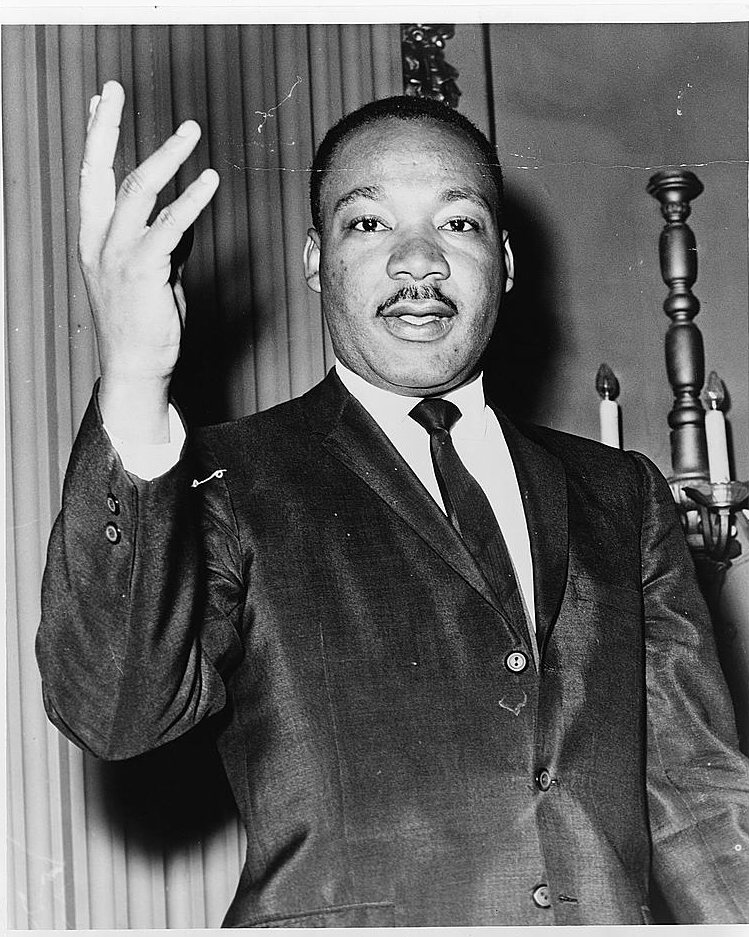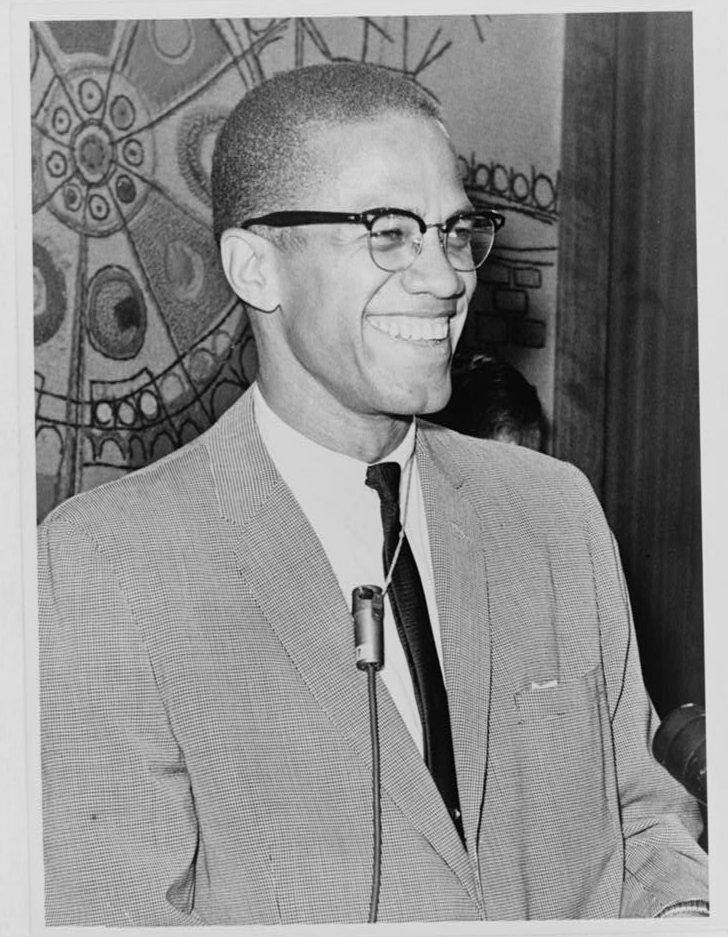
Black-and-white photograph of Malcolm X smiling broadly, wearing browline glasses, a light suit and a dark tie, with a microphone in front of him.

Malcolm X

1925 – 1965

A powerful voice for Black pride and self-determination.

Draft for committee review

Born Malcolm Little

Malcolm X was born Malcolm Little on May 19, 1925, in Omaha, Nebraska, the fourth of seven children of Earl and Louise Little. His parents belonged to Marcus Garvey’s Universal Negro Improvement Association, which preached Black pride and self-reliance, and Earl Little, a Baptist minister, led its Omaha chapter. The Ku Klux Klan harassed the family, and they moved to Milwaukee and then to Lansing, Michigan.

In Lansing the family’s house was burned. In 1931 Earl Little was killed by a streetcar. Police called it an accident; relatives suspected a white supremacist group. In the winter of 1938–39 Louise Little was committed to the state mental hospital at Kalamazoo, where she remained for more than two decades. The children were split up, and Malcolm was sent to a juvenile home in Mason, Michigan. He did well in school there, but a teacher discouraged his hope of becoming a lawyer.

Prison and a new name

In February 1941 he moved to Boston to live with his half-sister, Ella Little Collins, who became his legal guardian. He worked odd jobs, including as a railroad porter, and drifted into crime in Boston and New York. In January 1946 he was arrested. Convicted of larceny, breaking and entering and carrying a gun, he was sentenced to eight to ten years in prison.

In 1948 Ella helped arrange his transfer to the Norfolk Prison Colony, which had an education program. There he read history, philosophy and religion. His brothers and sisters, who had joined the Nation of Islam, wrote to him about the teachings of its leader, Elijah Muhammad, and he joined the Nation in prison. Paroled on August 7, 1952, he went to Detroit, met Elijah Muhammad in Chicago and replaced the surname Little with X, rejecting it as a name given to his family in slavery.

I have never before seen sincere and true brotherhood practiced by all colors together, irrespective of their color.

Malcolm X (El-Hajj Malik El-Shabazz), letter home from his pilgrimage to Mecca, April 1964, as printed in The Autobiography of Malcolm X (1965)

Minister of the Nation

Malcolm X rose quickly. After serving as assistant minister in Detroit, he led the temple in Boston and helped open others along the East Coast. In 1954 he became minister of Temple No. 7 in Harlem. The Nation, with an estimated 400 members in 1952, grew within a few years to tens of thousands.

The Nation preached racial pride, strict personal discipline, Black economic independence and separation from white America. It rejected integration as a goal, and Malcolm X sharply criticized the nonviolent civil rights movement. In 1957, after New York police beat a Nation member, he led a crowd of supporters to the precinct house and demanded medical care for the injured man. A 1959 television documentary, The Hate That Hate Produced, made him nationally known. In 1958 he married Betty Sanders, who had joined the Harlem temple while training as a nurse, and around 1960 he started the newspaper Muhammad Speaks.

A break, and a pilgrimage

By 1963 his relations with the Nation’s leaders were strained, partly over Elijah Muhammad’s personal conduct. On December 1, 1963, days after President John F. Kennedy was assassinated, Malcolm X called the killing a case of “chickens coming home to roost.” Elijah Muhammad silenced him for ninety days. In March 1964 Malcolm X announced that he was leaving the Nation and formed Muslim Mosque, Inc.

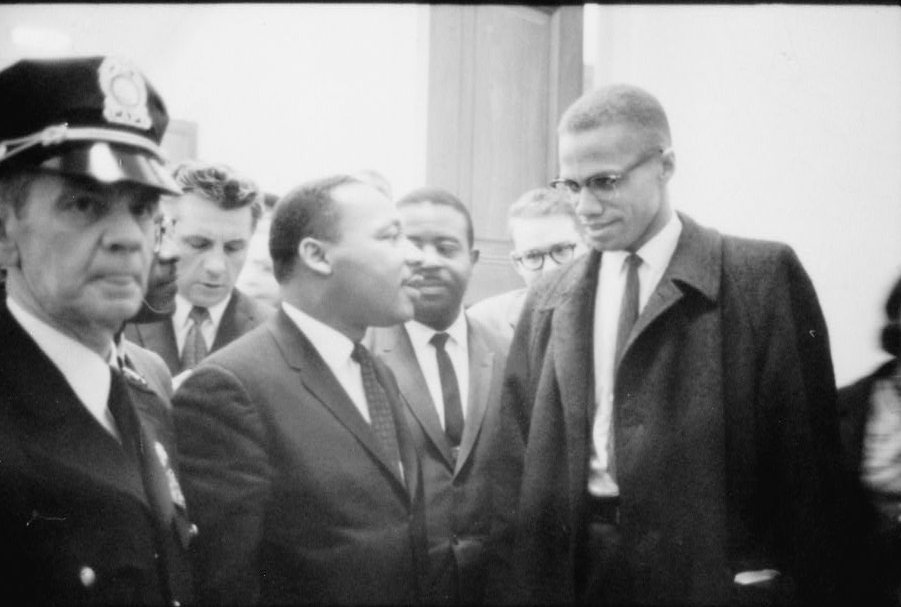
On March 26, 1964, during the Senate debate on the civil rights bill, he and Martin Luther King Jr. were both at the U.S. Capitol. They met briefly and shook hands. It was the only time they met.

In April he traveled to the Middle East and Africa and made the pilgrimage to Mecca, taking the name El-Hajj Malik El-Shabazz. In letters home he described worshipping beside Muslims of every color, and afterward he spoke more openly of working with people across racial lines. On June 28, 1964, he founded the Organization of Afro-American Unity. He spent much of the rest of the year in Africa, seeking support to bring a charge against the United States before the United Nations over its treatment of Black Americans.

The last weeks

On February 4, 1965, he spoke in Selma, Alabama. On February 14 his family’s home in Queens was firebombed; they escaped unharmed. On February 21, 1965, as he began to speak at an Organization of Afro-American Unity meeting at the Audubon Ballroom in Manhattan, he was shot and killed. He was thirty-nine.

Three members of the Nation of Islam were convicted of his murder in 1966. One of them, Talmadge Hayer (later Mujahid Abdul Halim), confessed and testified that the other two were not involved. In November 2021, after a reinvestigation found that evidence held by the FBI and the New York Police Department had never been given to the defense, a Manhattan court vacated the convictions of the other two men, Muhammad Aziz and Khalil Islam.

Malcolm X had been telling his life story to the writer Alex Haley since 1963. The Autobiography of Malcolm X was published later in 1965 and sold millions of copies. Betty Shabazz, pregnant when he died, gave birth to their last two daughters that year.
In the archive

Three portraits

  • Black-and-white photograph of Malcolm X smiling broadly, wearing browline glasses, a light suit and a dark tie, with a microphone in front of him. (view at the source, opens in a new tab)
    March 1964Photographed in March 1964, the month he announced his break with the Nation of Islam.Ed Ford, New York World-Telegram & Sun. Library of Congress, Prints and Photographs Division (LC-USZ62-115058).
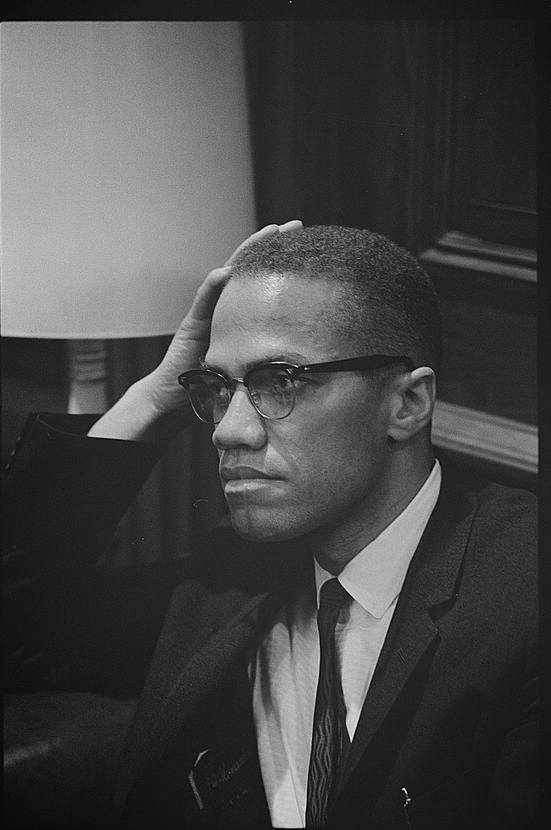
  • Black-and-white photograph of Malcolm X seated, resting his head on his right hand, wearing browline glasses, a dark suit and tie, with a lamp behind him. (view at the source, opens in a new tab)
    March 26, 1964Waiting for a press conference to begin at the U.S. Capitol.Marion S. Trikosko, U.S. News & World Report. Library of Congress, Prints and Photographs Division (LC-U9-11695, frame 5).
  • Black-and-white photograph of Martin Luther King Jr. and Malcolm X facing each other in a small crowd of men, a uniformed police officer in the left foreground. (view at the source, opens in a new tab)
    March 26, 1964Malcolm X (right) and Martin Luther King Jr. (left of center) at the U.S. Capitol.Marion S. Trikosko, U.S. News & World Report. Library of Congress, Prints and Photographs Division (LC-USZ6-1847).

Key moments

Malcolm X’s life in time

  1. 1925

    Born Malcolm Little on May 19 in Omaha, Nebraska.

  2. 1931

    His father, Earl Little, is killed by a streetcar in Lansing, Michigan.

  3. 1941

    Moves to Boston to live with his half-sister, Ella Little Collins.

  4. 1946

    Sentenced to eight to ten years in prison in Massachusetts.

  5. 1952

    August 7: paroled, having joined the Nation of Islam in prison. Takes the name Malcolm X.

  6. 1954

    Becomes minister of Temple No. 7 in Harlem.

  7. 1958

    Marries Betty Sanders.

  8. 1959

    The television documentary The Hate That Hate Produced makes him nationally known.

  9. 1963

    December: silenced by Elijah Muhammad after his remark on President Kennedy’s assassination.

  10. 1964

    March: leaves the Nation; meets Martin Luther King Jr. at the Capitol. April: makes the pilgrimage to Mecca. June 28: founds the Organization of Afro-American Unity.

  11. 1965

    February 21: assassinated at the Audubon Ballroom. His autobiography is published that year.

  12. 2021

    November 18: a Manhattan court vacates the convictions of Muhammad Aziz and Khalil Islam.

June 19, 1865

Connection to Juneteenth

On June 19, 1865, Union troops at Galveston, Texas, announced that all enslaved people in Texas were free. Malcolm X was born sixty years later, in 1925, and had no part in the holiday’s history. His connection to Juneteenth is not one of dates or places. It lies in his insistence that the story of slavery be told whole, and that freedom be claimed in full rather than waited for.

He began with his own name. When he joined the Nation of Islam he gave up the surname Little, which he regarded as a name imposed on his family in slavery, and took X to stand for the African name his ancestors had lost. His name itself became an act of remembrance, a reminder each time it was spoken of what slavery had taken.

He also believed that Black Americans had been taught too little of their own past. His widow, Betty Shabazz, recalled that he wanted people who had lost hope to realize “they had a past before slavery,” and that “they had responsibility now, and that no one was going to give them anything.” Pride in that history and self-reliance were at the center of his message, and through The Autobiography of Malcolm X, published after his death, it reached millions of readers in the generations that followed.

In his last year he widened the frame. After leaving the Nation of Islam, he traveled to Africa, attended the summit of the Organization of African Unity, and sought support for a charge against the United States at the United Nations over its treatment of African Americans. He was treating the unfinished business of emancipation as a question of human rights, to be judged by the world. In February 1965 he went to Selma, Alabama, where the campaign for the vote was under way, and told Coretta Scott King that he had not come to make her husband’s work harder: if white Americans saw the alternative, he suggested, they might be more willing to listen to Dr. King. Less than three weeks later he was killed.

Malcolm X and the leaders of the nonviolent movement disagreed sharply about methods and goals, and he criticized them for much of his career. But they were wrestling with the same question Juneteenth still poses: once freedom has been announced, what will it take to make it real?

Sources

Where this story comes from

Every fact on this page is drawn from the sources listed here. Quotations are given as they were first recorded.

  1. Malcolm X (opens in a new tab)Smithsonian National Museum of African American History and Culture
  2. Malcolm X: Legacy, Black Identity and Empowerment (opens in a new tab)Smithsonian National Museum of African American History and Culture
  3. African American Heritage: Malcolm X (opens in a new tab)National Archives
  4. Malcolm X House Site (opens in a new tab)National Park Service
  5. National Register of Historic Places nomination: Malcolm X–Ella Little Collins House, Boston (opens in a new tab)National Park Service
  6. Malcolm X (opens in a new tab)The Martin Luther King, Jr. Research and Education Institute, Stanford University
  7. Malcolm X, by Clayborne Carson (American National Biography) (opens in a new tab)Stanford University
  8. Malcolm X: Make It Plain — Timeline (opens in a new tab)PBS, American Experience
  9. Khalil Islam (opens in a new tab)National Registry of Exonerations (University of Michigan Law School and UC Irvine Newkirk Center)
  10. 2 men convicted of killing civil rights leader Malcolm X are exonerated in court (opens in a new tab)NPR (November 17, 2021)
  11. Malcolm X’s Speech at the Founding Rally of the Organization of Afro-American Unity, June 28, 1964 (text from By Any Means Necessary, ed. George Breitman, Pathfinder Press, 1970) (opens in a new tab)BlackPast
  12. The Autobiography of Malcolm X, with Alex Haley (Ballantine edition, 1973) (opens in a new tab)Internet Archive
  13. Malcolm X and the Civil Rights Movement (opens in a new tab)PBS, American Experience

Portraits: Ed Ford, New York World-Telegram & Sun, March 1964; Marion S, March 26, 1964; Marion S, March 26, 1964. Public domain in the United States.