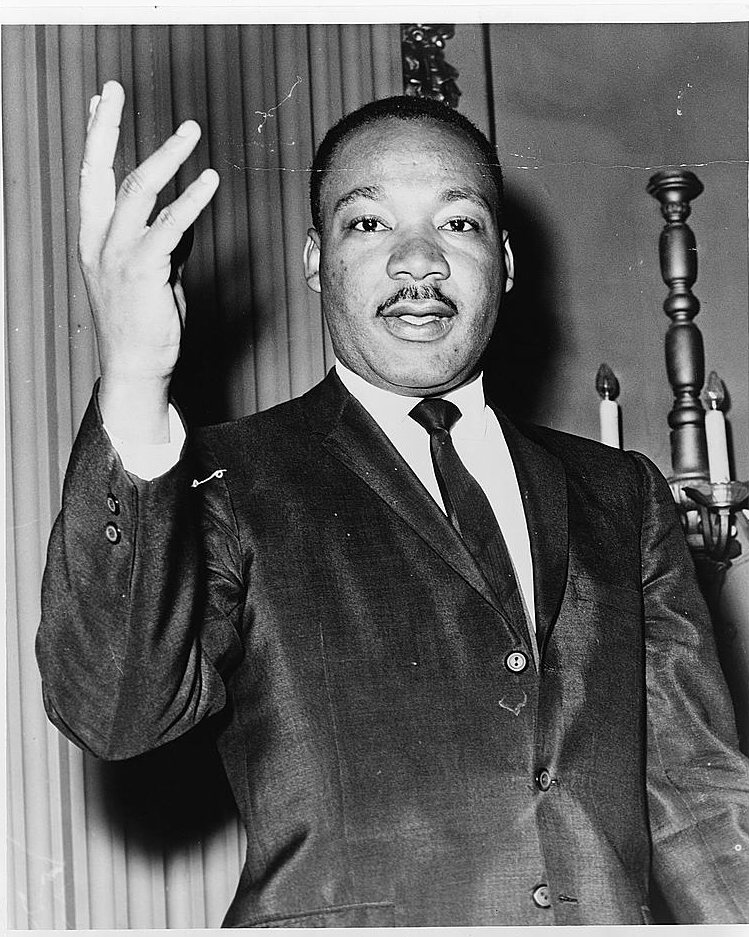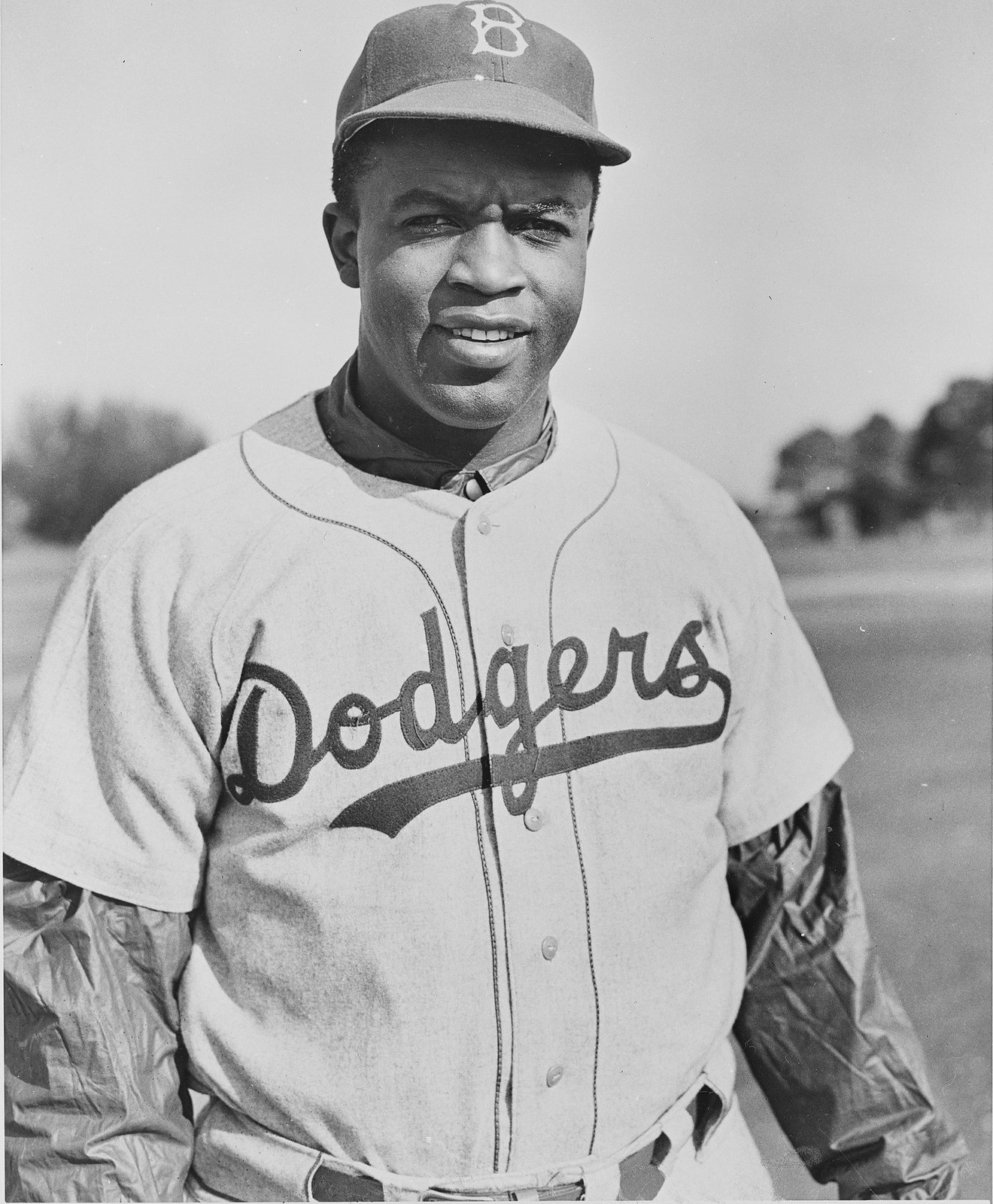
Black-and-white photograph of Jackie Robinson outdoors in a Brooklyn Dodgers uniform and cap with a B on the front, looking at the camera.

Jackie Robinson

1919 – 1972

Broke Major League Baseball’s color line in 1947.

Draft for committee review

From Cairo to Pasadena

Jack Roosevelt Robinson was born on January 31, 1919, near Cairo, Georgia, the youngest of five children. His parents, Jerry and Mallie Robinson, worked as tenants on a plantation. His father left the family, and in 1920 his mother took the children by train to Pasadena, California, where her half brother lived.

Robinson starred in sports at Pasadena Junior College and entered the University of California, Los Angeles, in 1939. At UCLA he became the first student to earn varsity letters in four sports: football, basketball, track and baseball. In 1940 he won the national collegiate title in the broad jump. He left UCLA in the spring of 1941 to help support his family.

A soldier on trial

Robinson was inducted into the U.S. Army in 1942 and commissioned a second lieutenant in January 1943. On July 6, 1944, at Camp Hood, Texas, the driver ordered him to move to the back of an army bus. Robinson refused. The War Department had recently ordered its military buses desegregated, and he said so.

When the bus reached the transfer station, military police took him in for questioning, and the confrontation that followed led to a court-martial. He was charged with disrespect toward a superior officer and with disobeying a lawful order. On August 2, 1944, a military court found him not guilty on every charge. He received an honorable discharge that November.

17 million Negroes cannot do as you suggest and wait for the hearts of men to change. We want to enjoy now the rights that we feel we are entitled to as Americans.

Jackie Robinson, letter to President Dwight D. Eisenhower, May 13, 1958 (Dwight D. Eisenhower Presidential Library, National Archives)

Breaking the color line

In 1945 Robinson played shortstop for the Kansas City Monarchs of the Negro American League. That summer Branch Rickey, president of the Brooklyn Dodgers, scouted him, and that fall Rickey signed him to the Dodgers organization. In 1946 Robinson married Rachel Isum, and he played that season for the Montreal Royals, the Dodgers’ top farm team. He led the International League in batting and in runs scored, and the Royals won the pennant.

On April 15, 1947, Robinson started at first base for the Brooklyn Dodgers. He was the first Black player in the major leagues in the twentieth century. He faced hostility from opposing players and from fans, and he won the first Rookie of the Year award given by Major League Baseball.

Dodger

In 1949 Robinson led the National League with a .342 batting average and was named its Most Valuable Player. Over ten seasons in Brooklyn he played in six World Series and six All-Star Games, and in 1955 the Dodgers won the World Series over the New York Yankees. In 1950 he played himself in a film, The Jackie Robinson Story, and in 1956 the NAACP awarded him its Spingarn Medal. After the 1956 season the Dodgers traded him to the New York Giants. He chose to retire instead. In 1962 he became the first Black player elected to the Baseball Hall of Fame.

After baseball

From 1957 to 1964 Robinson was a vice president of the Chock full o’Nuts restaurant company. He chaired the NAACP’s Fight for Freedom Fund drive and spoke beside Martin Luther King Jr. He wrote to presidents to press for civil rights. In 1957 he urged the White House to veto a weakened civil rights bill unless it was strengthened, and in May 1958, after Eisenhower told a meeting of Black leaders that they must have patience, Robinson answered him in a letter now held at the Eisenhower Presidential Library.

He took part in the March on Washington in 1963. In 1964 he helped found Freedom National Bank in Harlem, and from 1966 to 1968 he served as special assistant for community affairs to New York governor Nelson Rockefeller. His memoir, I Never Had It Made, appeared in 1972. Robinson died of a heart attack on October 24, 1972, in Stamford, Connecticut, at the age of 53. In 1997 Major League Baseball retired his number 42 for every team.
In the archive

Three portraits

  • Black-and-white photograph of Jackie Robinson outdoors in a Brooklyn Dodgers uniform and cap with a B on the front, looking at the camera. (view at the source, opens in a new tab)
    1950Jackie Robinson in his Brooklyn Dodgers uniform.U.S. Information Agency. National Archives, Records of the U.S. Information Agency (RG 306), Master File Photographs of U.S. and Foreign Personalities (306-PS-50-7551).
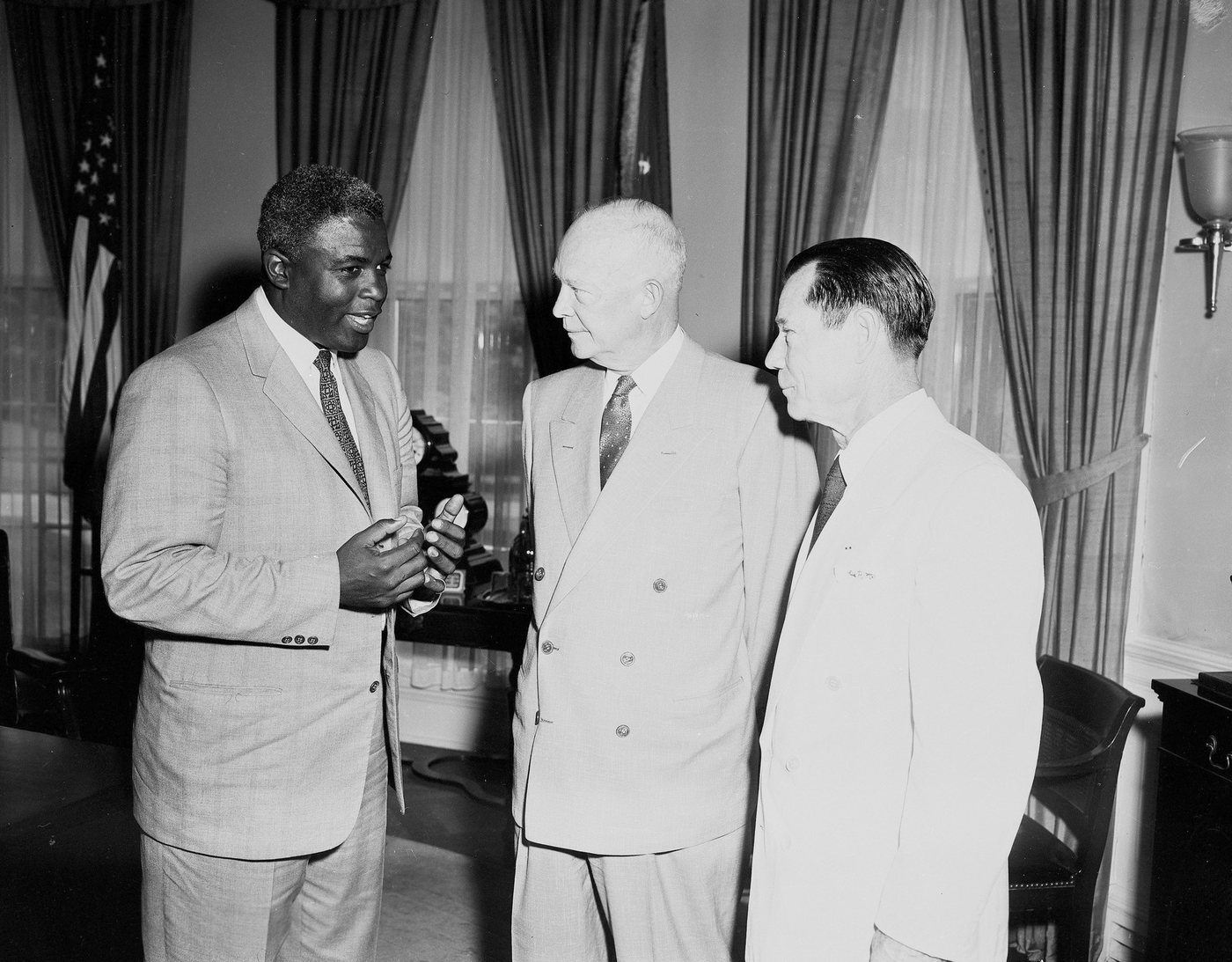
  • Black-and-white photograph of Jackie Robinson in a light suit, gesturing as he speaks with President Eisenhower and Joe E. Brown in an office with draped windows and an American flag. (view at the source, opens in a new tab)
    May 11, 1957Jackie Robinson talks with President Dwight D. Eisenhower and comedian Joe E. Brown at the White House.National Park Service White House photograph. National Archives, Records of the National Park Service (RG 79), White House Photographs (79-AR-4175C).
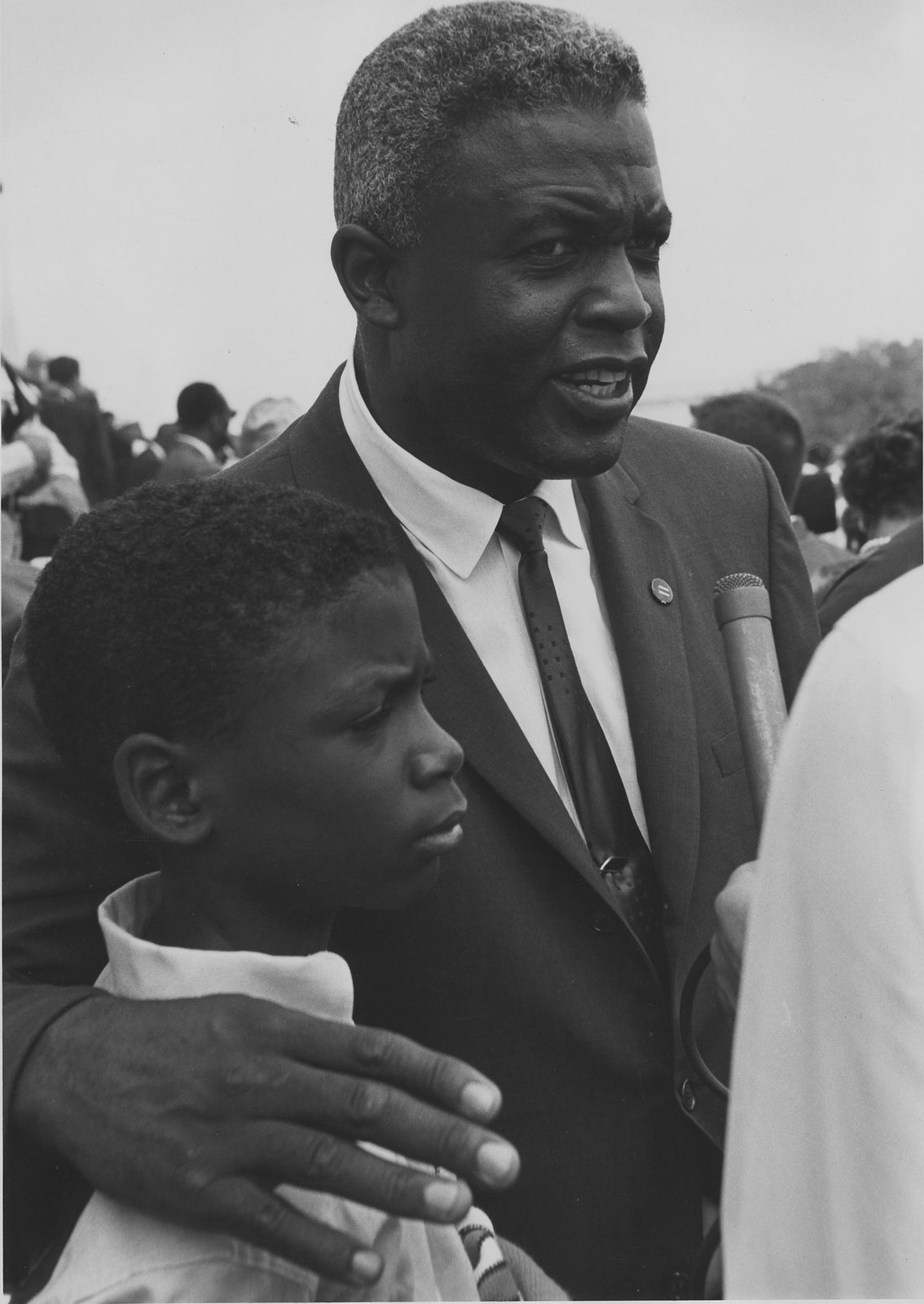
  • Black-and-white photograph of a gray-haired Jackie Robinson in a dark suit, his hand on the shoulder of a young boy in front of him, among the crowd at the March on Washington. (view at the source, opens in a new tab)
    August 28, 1963Jackie Robinson with his son at the March on Washington for Jobs and Freedom.U.S. Information Agency. National Archives, Records of the U.S. Information Agency (RG 306), Miscellaneous Subjects, Staff and Stringer Photographs (306-SSM-4C-54-26).

Key moments

Jackie Robinson’s life in time

  1. 1919

    Born January 31 near Cairo, Georgia.

  2. 1944

    July 6: refuses to move to the back of an army bus at Camp Hood, Texas. August 2: acquitted by court-martial.

  3. 1945

    Plays for the Kansas City Monarchs and signs with the Brooklyn Dodgers organization.

  4. 1946

    Marries Rachel Isum and leads the International League in batting for Montreal.

  5. 1947

    April 15: takes the field for the Brooklyn Dodgers. Named Rookie of the Year.

  6. 1949

    Wins the National League batting title and Most Valuable Player award.

  7. 1955

    The Dodgers win the World Series.

  8. 1957

    Retires from baseball and joins Chock full o’Nuts as a vice president.

  9. 1958

    May 13: writes to President Eisenhower that Black Americans cannot wait for their rights.

  10. 1962

    Elected to the Baseball Hall of Fame.

  11. 1964

    Helps found Freedom National Bank in Harlem.

  12. 1972

    Publishes I Never Had It Made. Dies on October 24 in Stamford, Connecticut.

June 19, 1865

Connection to Juneteenth

Slavery was not distant history in Jackie Robinson’s family. His mother’s father, Washington McGriff, was born in Thomas County, Georgia, in 1846 and spent his childhood in slavery. Robinson himself was born in 1919, fifty-four years after General Order No. 3 was read at Galveston, to parents who worked a Georgia plantation as tenants. Emancipation had come, and in 1868 the Fourteenth Amendment had promised every person the equal protection of the laws, but across the South segregation kept that promise out of reach in schools, on buses, in ballparks and in much else.

In the summer of 1944 the promise was tested in Texas, the state where Juneteenth began. Second Lieutenant Robinson was stationed at Camp Hood, where he was assigned to the 761st Tank Battalion, a Black armored unit. On July 6 a driver ordered him to the back of an army bus. The War Department had ordered its buses desegregated, Robinson knew it, and he would not move. The Army charged him over the confrontation that followed, with disrespect toward a superior officer and with disobeying an order. Ten days after the incident he wrote to Truman K. Gibson Jr., civilian aide to the Secretary of War: “I don’t mind trouble but I do believe in fair play and justice.” On August 2 a court-martial convened at Camp Hood found him not guilty on every charge.

Seventy-nine years lay between Galveston and Camp Hood, and the lesson was the same. In 1865 an order announced freedom in Texas; in 1944 an order opened the army’s buses to every soldier. Both times, the words on paper had to be claimed in person, by people willing to bear the cost. Robinson was. Three years later he crossed baseball’s color line under the eyes of the nation, and in 1958, ninety-three years after emancipation, he reminded President Eisenhower that Black Americans had been “the most patient of all people.”

He kept measuring the distance still to go until the end. On October 15, 1972, honored at the World Series in Cincinnati on the twenty-fifth anniversary of his first major league game, he told the crowd: “I’m going to be tremendously more pleased and more proud when I look at that third base coaching line one day and see a Black face managing in baseball.” He died nine days later. Frank Robinson became the first Black manager in the major leagues in 1975.

The remembering began at once. In 1973 Rachel Robinson founded the Jackie Robinson Foundation, which supports the education of young people of color, and since 2004 Major League Baseball has kept April 15 as Jackie Robinson Day; since 2009 every player on the field that day wears his number, 42. Like Juneteenth, it is a day set aside so that a story of freedom claimed is told again, every year, to those who were not there.

Sources

Where this story comes from

Every fact on this page is drawn from the sources listed here. Quotations are given as they were first recorded.

  1. Jackie Robinson Papers: Scope and Content Note and Chronology (opens in a new tab)Library of Congress, Manuscript Division
  2. General Court-Martial Orders Number 130 (Jackie Robinson), August 23, 1944 (opens in a new tab)National Archives, Documented Rights exhibition
  3. Letter from Jackie Robinson to President Dwight D. Eisenhower (1958) (opens in a new tab)National Archives, Educator Resources
  4. Letter from Jackie Robinson to President Eisenhower, 5/13/1958 (NAID 186627) (opens in a new tab)National Archives, DocsTeach
  5. Jackie Robinson’s 100th (opens in a new tab)National Archives, Pieces of History blog
  6. Jackie Robinson (opens in a new tab)National Park Service
  7. “My Dear Mr. President”: Jackie Robinson and Dwight Eisenhower (opens in a new tab)National Park Service, Eisenhower National Historic Site
  8. Jackie Robinson (1919–1972) (opens in a new tab)New Georgia Encyclopedia
  9. Jackie Robinson (opens in a new tab)Encyclopaedia Britannica
  10. Congressional Gold Medal Honors Jackie Robinson (press release, March 2, 2005) (opens in a new tab)United States Mint
  11. Module 08: Jackie Robinson, Civil Rights Leader? (transcription of the 1958 letter) (opens in a new tab)Virginia Tech, Digital History Reader
  12. United States v. 2nd Lt. Jack R. Robinson (opens in a new tab)The National WWII Museum
  13. Hall of Famer (Jackie Robinson’s family history) (opens in a new tab)American Ancestors, New England Historic Genealogical Society, Vita Brevis
  14. This Month in History: October (Robinson at the 1972 World Series) (opens in a new tab)Jackie Robinson Foundation
  15. Our History (opens in a new tab)Jackie Robinson Foundation
  16. April 8, 1975: Frank Robinson debuts as first black manager in major leagues (opens in a new tab)Society for American Baseball Research
  17. Jackie Robinson Day (opens in a new tab)Major League Baseball

Portraits: U, 1950; National Park Service White House photograph, May 11, 1957; U, August 28, 1963. Public domain in the United States.