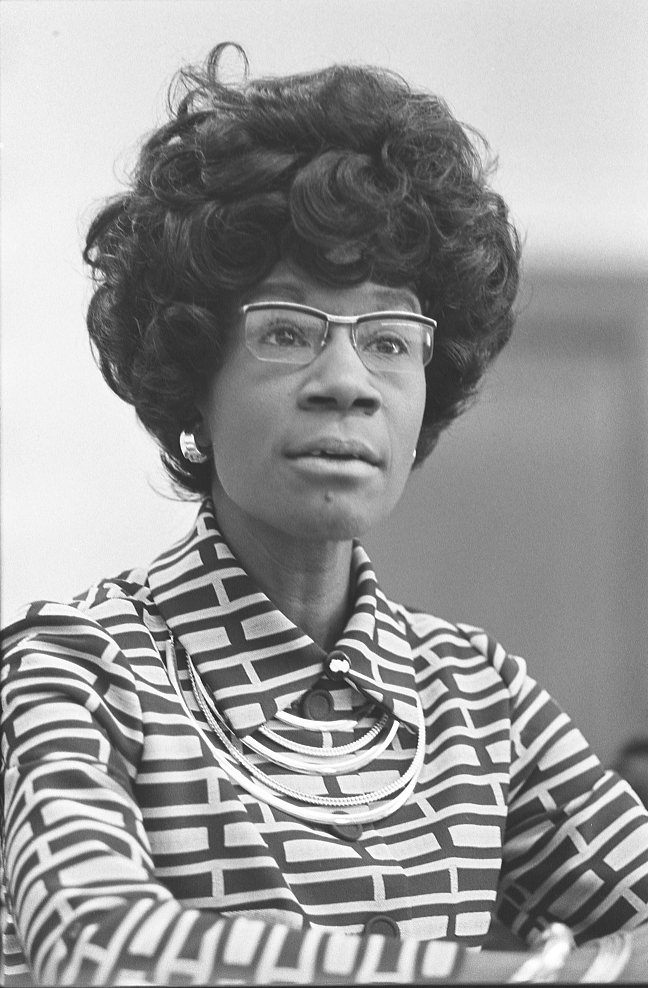
Black-and-white photograph of Shirley Chisholm wearing glasses and a boldly patterned high-collared dress, seated and looking off to the side.

Shirley Chisholm

1924 – 2005

The first Black woman elected to Congress, in 1968; ran for president in 1972.

Draft for committee review

Brooklyn and Barbados

Shirley Anita St. Hill was born in Brooklyn, New York, on November 30, 1924, the oldest of four daughters. Her father, Charles St. Hill, was a factory worker from British Guiana, now Guyana. Her mother, Ruby Seale St. Hill, was a seamstress from Barbados.

As a small child she was sent with her sisters to live with her grandmother on the family farm in Barbados, where she went to school in the British style. She came back to Brooklyn in 1934. “Granny gave me strength, dignity, and love,” she later said. “I learned from an early age that I was somebody.”

She won a scholarship to Brooklyn College and graduated in 1946. She went on to earn a master’s degree in education from Columbia University in 1952. In 1949 she married Conrad Q. Chisholm. For nearly two decades she worked with young children, as a nursery school teacher, as director of day care centers, and from 1959 to 1964 as a consultant to New York City’s day care division.

Unbought and unbossed

In 1964 Chisholm was elected to the New York State Assembly. She was only the second Black woman to serve there. In Albany she supported SEEK, a program that helped students from poor neighborhoods attend college, and the extension of unemployment insurance to domestic workers.

In 1968 a court-ordered redistricting created a new congressional district in Brooklyn. Chisholm ran for it. She won the Democratic primary by about 800 votes, then faced the civil rights leader James Farmer in the general election. Her slogan was “unbought and unbossed.” She won with 67 percent of the vote and became the first Black woman elected to the United States Congress.

I stand before you today as a candidate for the Democratic nomination for the presidency of the United States of America. I am not the candidate of black America, although I am black and proud.

Shirley Chisholm, announcing her presidential candidacy, Concord Baptist Church, Brooklyn, New York, January 25, 1972

In the House

The House first placed Chisholm on the Agriculture Committee. She appealed, and was moved to Veterans’ Affairs. “There are a lot more veterans in my district than trees,” she said. In 1971 she joined Education and Labor, and in 1977 she became the first Black woman, and the second woman, to sit on the powerful Rules Committee. From 1977 to 1981 she served as secretary of the House Democratic Caucus.

In 1971 she was a founding member of the Congressional Black Caucus and of the National Women’s Political Caucus. She opposed the Vietnam War and supported the Equal Rights Amendment. In 1975 she added an amendment to a national school lunch bill that widened eligibility, and she helped Congress override President Gerald Ford’s veto of the measure. In 1970 she published a memoir, Unbought and Unbossed.

A run for the White House

On January 25, 1972, at Concord Baptist Church in Brooklyn, Chisholm announced that she would seek the Democratic nomination for president. She was the first Black woman to run for a major party’s nomination. She told her audience that she was not the candidate of any single group or of political bosses, but of the people of America.

Her name appeared on primary ballots in twelve states. She won a place in a televised primary debate only after taking legal action. When the segregationist candidate George Wallace was left paralyzed by an assassination attempt, Chisholm visited him in the hospital, to the surprise of many of her own supporters. At the Democratic National Convention in Miami Beach that July, she received 152 delegate votes. The nomination went to George McGovern.

Teacher and elder

Chisholm chose not to run again in 1982 and left Congress in January 1983. She taught at Mount Holyoke College in Massachusetts from 1983 to 1987, offering courses on Congress, on women’s roles in society, and on Black women in America. She helped found the National Political Congress of Black Women and campaigned for Jesse Jackson’s presidential bids in 1984 and 1988.

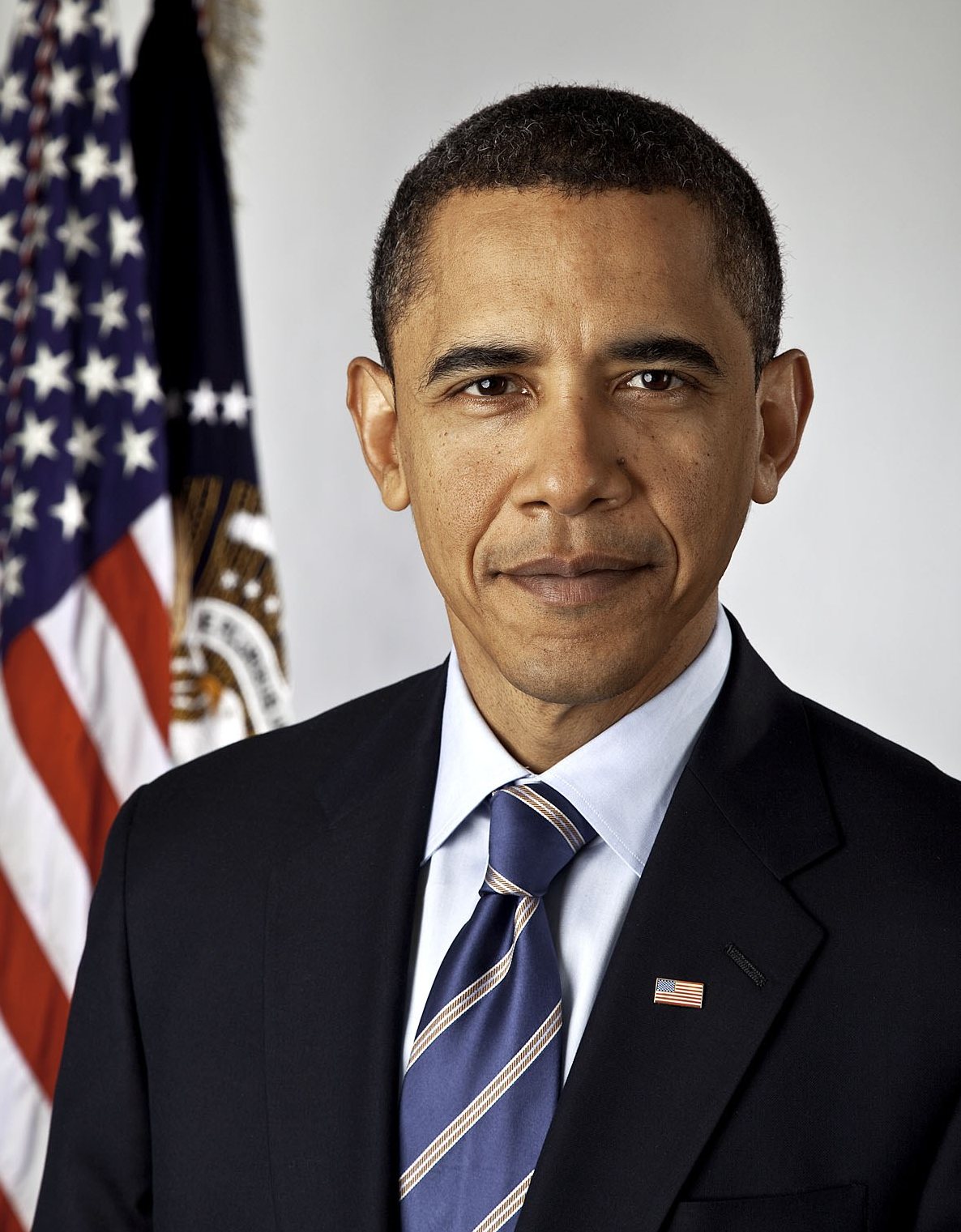
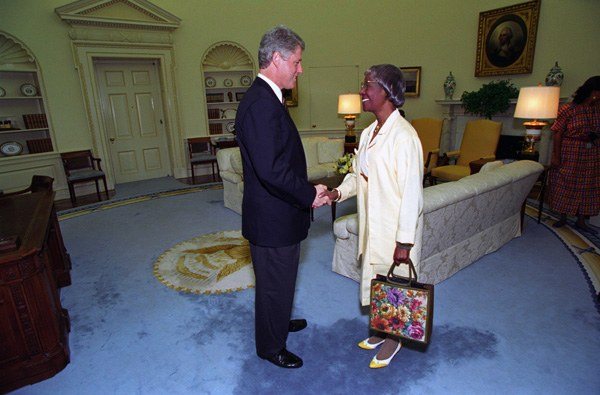
In 1993 President Bill Clinton named her ambassador to Jamaica, but she withdrew because of poor health. She died on January 1, 2005, in Ormond Beach, Florida, at the age of 80, and is buried in Buffalo, New York. In 2015 President Barack Obama awarded her the Presidential Medal of Freedom.
In the archive

Three portraits

  • Black-and-white photograph of Shirley Chisholm wearing glasses and a boldly patterned high-collared dress, seated and looking off to the side. (view at the source, opens in a new tab)
    January 25, 1972Representative Shirley Chisholm in 1972, the year she ran for the Democratic presidential nomination.Thomas J. O'Halloran, U.S. News & World Report. Library of Congress Prints and Photographs Division, U.S. News & World Report Magazine Photograph Collection (LC-DIG-ppmsc-01264; digital file ds.07135).
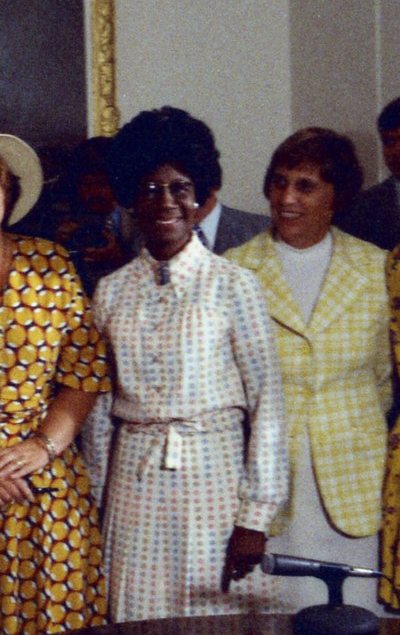
  • Color photograph of a group of women members of Congress standing around a table in the White House Cabinet Room with President Ford; Shirley Chisholm, in glasses and a pale patterned dress, smiles near the center. (view at the source, opens in a new tab)
    August 22, 1974Representative Chisholm (center, in glasses) with fellow congresswomen and President Gerald R. Ford after the signing of the 1974 Women's Equality Day proclamation.White House Photographic Office (Ford Administration). Gerald R. Ford Presidential Library, National Archives (GRF-WHPO-A0294-31A).
  • Color photograph of President Clinton shaking hands with Shirley Chisholm, who wears a white coat and carries a floral handbag, on the blue carpet of the Oval Office. (view at the source, opens in a new tab)
    July 30, 1993President Bill Clinton greets Shirley Chisholm, then ambassador-designate to Jamaica, in the Oval Office.Robert McNeely, White House Photograph Office (Clinton Administration). William J. Clinton Presidential Library, National Archives (P06037-11a).

Key moments

Shirley Chisholm’s life in time

  1. 1924

    Born Shirley Anita St. Hill on November 30 in Brooklyn, New York.

  2. 1934

    Returns to Brooklyn after several childhood years on her grandmother’s farm in Barbados.

  3. 1946

    Graduates from Brooklyn College.

  4. 1964

    Elected to the New York State Assembly.

  5. 1968

    Defeats James Farmer to become the first Black woman elected to Congress.

  6. 1970

    Publishes her memoir, Unbought and Unbossed.

  7. 1971

    Founding member of the Congressional Black Caucus.

  8. 1972

    January 25: announces her run for president. July: wins 152 delegate votes at the Democratic convention.

  9. 1977

    Joins the House Rules Committee, the first Black woman to serve on it.

  10. 1983

    Leaves Congress and begins teaching at Mount Holyoke College.

  11. 2005

    Dies on January 1 in Ormond Beach, Florida.

  12. 2015

    Awarded the Presidential Medal of Freedom by President Barack Obama.

June 19, 1865

Connection to Juneteenth

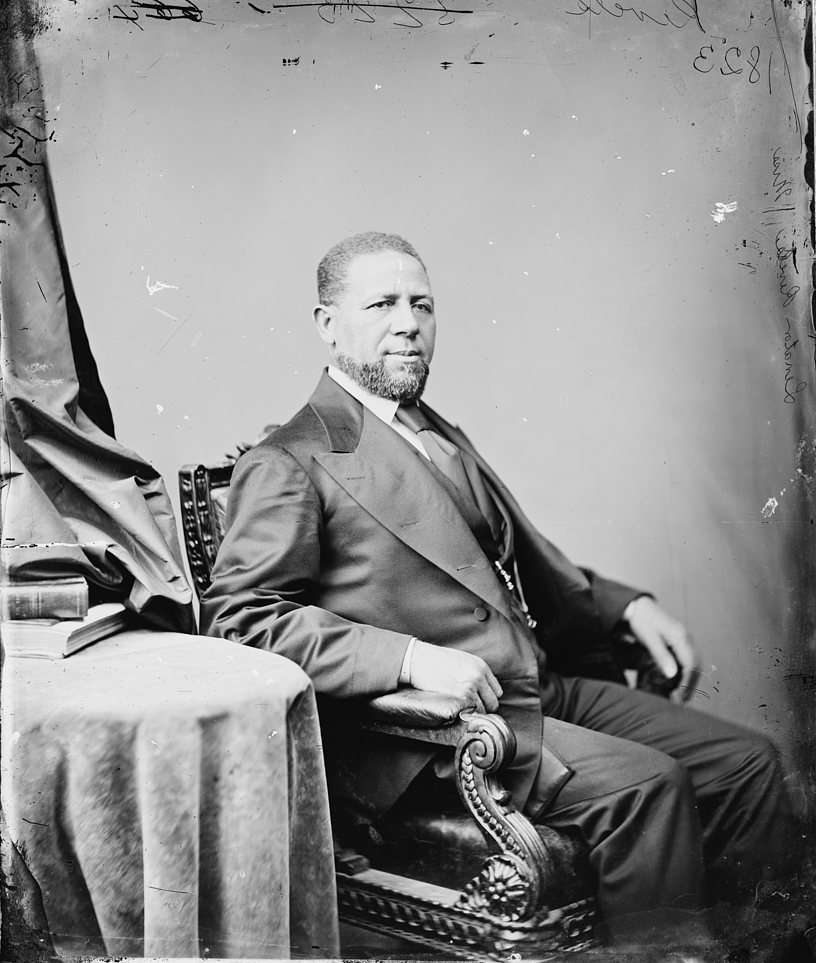
Freedom announced at Galveston on June 19, 1865, was only the first of the promises the nation would have to keep. The Fourteenth and Fifteenth Amendments followed, making formerly enslaved people citizens and barring the denial of the vote on account of race. In 1870 Hiram Revels of Mississippi and Joseph Rainey of South Carolina became the first Black members of the Senate and the House, and twenty-two Black men entered Congress in the decades after the Civil War. Then the door swung shut. From 1901 to 1929 no Black member sat in the House at all, and for nearly a century after Revels and Rainey no Black woman sat in Congress.

Shirley Chisholm had no part in the events of 1865, and she was not the first Black member of Congress. She was the first Black woman, elected in 1968, and her seat was itself a product of the long struggle over who would be represented. A court-ordered redistricting had carved a new Brooklyn district with a slight Black majority out of her Bedford-Stuyvesant neighborhood. She ran, and served, on her own terms. “I am the people’s politician,” she said.

She understood that freedom had to be measured in daily life as well as in law. General Order No. 3 had told the people of Texas that the bond between former masters and the formerly enslaved “becomes that between employer and hired labor”: from its first day, freedom meant the right to be paid for one’s work. More than a century later, domestic workers, in a profession that disproportionately employed women of color, still stood outside federal minimum wage rules. In 1973 Chisholm was a leading proponent of an amendment to bring them under those rules.

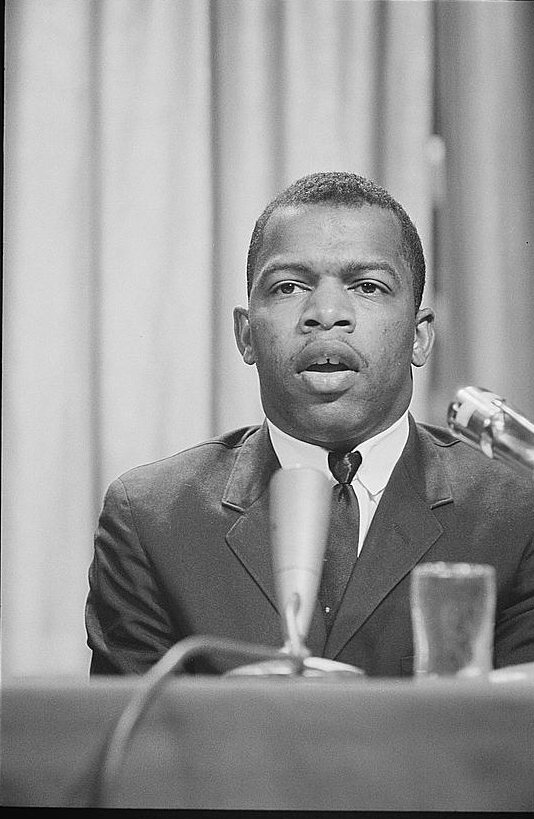
She also understood the power of a day of remembrance. A founding member of the Congressional Black Caucus, she helped Representative John Conyers Jr. keep his bill for a national holiday honoring Martin Luther King Jr. before Congress year after year. President Ronald Reagan signed it into law on November 2, 1983, ten months after she left the House. Juneteenth’s own road would be longer still: forty-one years passed between its first observance as a Texas state holiday in 1980 and its recognition as a federal holiday in 2021.

In the Congress that convened in 2019, half a century after Chisholm took her seat, a record twenty-five African American women served, among them one senator and two nonvoting delegates; forty-seven had served in Congress in all. Each of them walked a road that runs back through her election to the promises of 1865: freedom, citizenship, the vote, and the right not only to be counted but to be heard.

Sources

Where this story comes from

Every fact on this page is drawn from the sources listed here. Quotations are given as they were first recorded.

  1. CHISHOLM, Shirley Anita (opens in a new tab)U.S. House of Representatives, History, Art & Archives
  2. Shirley Chisholm (opens in a new tab)National Park Service
  3. African American Members of the U.S. Congress: 1870–2019 (RL30378) (opens in a new tab)Congressional Research Service, via EveryCRSReport
  4. Shirley Chisholm (opens in a new tab)Encyclopaedia Britannica
  5. Shirley Chisholm (opens in a new tab)National Women’s History Museum
  6. What former presidential candidate Shirley Chisholm said about facing gender discrimination (opens in a new tab)PBS NewsHour
  7. “Unbought and Unbossed”: When a Black Woman Ran for the White House (opens in a new tab)Smithsonian Magazine
  8. Shirley Anita Chisholm (opens in a new tab)Congressional Black Caucus Foundation, Avoice Virtual Library
  9. Shirley Chisholm: Presidential Candidacy Announcement (transcribed from audio) (opens in a new tab)American Rhetoric
  10. Catalyst for Change: Shirley Chisholm’s time in Congress, on campus and beyond (opens in a new tab)Mount Holyoke College Alumnae Association
  11. Juneteenth and General Orders, No. 3 (opens in a new tab)Galveston Historical Foundation
  12. Martin Luther King Jr. Holiday Bill: History (opens in a new tab)Congressional Black Caucus Foundation, Avoice Virtual Library
  13. The 15 Year Battle for Martin Luther King, Jr. Day (opens in a new tab)Smithsonian National Museum of African American History and Culture
  14. Juneteenth: Fact Sheet (R44865) (opens in a new tab)Congressional Research Service

Portraits: Thomas J, January 25, 1972; White House Photographic Office (Ford Administration), August 22, 1974; Robert McNeely, White House Photograph Office (Clinton Administration), July 30, 1993. Public domain in the United States.